Hugging Face’s Microduck Robot Draws Strong Demand After Launch
Hugging Face’s latest move into consumer robotics is off to a fast start, with its small duck-shaped robot attracting thousands of orders shortly after its debut.
The Microduck, developed by Hugging Face subsidiary Pollen Robotics, is a programmable bipedal robot designed to make experimenting with artificial intelligence and robotics more accessible. Priced at $399, the robot surpassed 10,000 orders within days of its launch, generating millions of dollars in sales and creating a backlog for new customers.
Demand has been strong enough that Pollen Robotics can no longer guarantee its original Christmas 2026 delivery target for newly placed orders. The company is working to increase production, with later customers potentially waiting several months for their robots.
A Small Robot Built for Experimentation
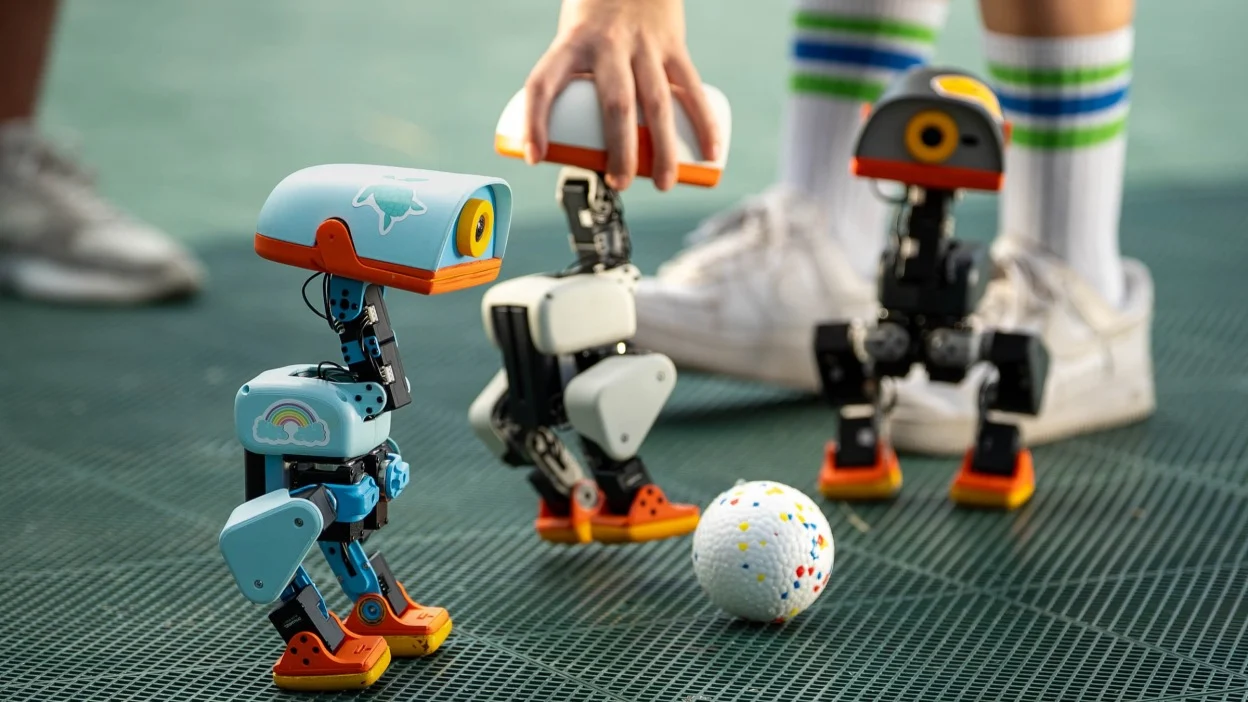
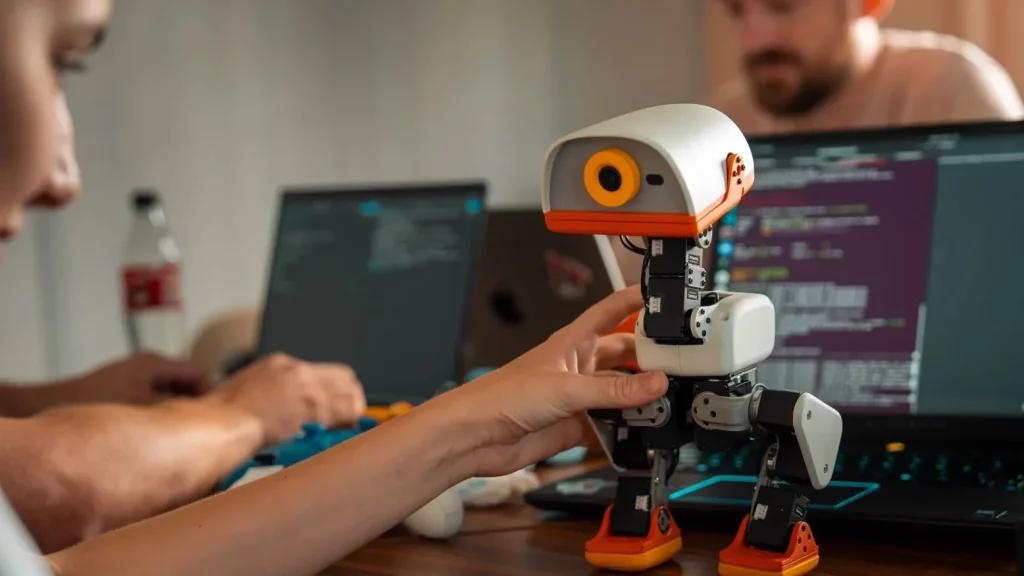
Standing about 25 centimeters tall and weighing less than 800 grams, Microduck combines a playful appearance with hardware intended for developers, students, and robotics enthusiasts.
The robot can walk, crouch, recover after falling, interact with objects, and even move around using miniature roller skates. Its articulated beak doubles as a gripper, allowing it to pick up lightweight objects.
Microduck also comes equipped with a camera, depth-sensing technology, motion sensors, and 15 motors. Wi-Fi and Bluetooth connectivity give developers additional ways to control and experiment with the device.
The robot isn’t intended to function only as a preprogrammed toy. Pollen Robotics has positioned it as a platform for experimenting with physical AI, including reinforcement learning. Developers can train behaviors in a simulated environment before transferring them to the physical robot.
Its open-source approach is also central to the product. Users can access development tools and software resources to create new behaviors rather than being limited to the actions installed by the manufacturer.
Chinese Chip Provides Microduck’s Computing Power
One of the notable components inside Microduck comes from China.
The robot uses Rockchip’s RK3566 processor for its onboard computing. Rockchip is a Shanghai-listed semiconductor company whose processors appear in a variety of consumer electronics and edge-computing devices.
The RK3566 itself incorporates technology licensed from Arm, the British chip architecture company. The combination illustrates the international nature of modern electronics supply chains, with a robot developed by a French company owned by a French-American AI business relying on Chinese semiconductor hardware built around British-designed technology.
Rockchip has established a significant presence in devices that perform some AI processing locally rather than relying entirely on cloud computing. Its chips are used in applications such as machine vision, including image recognition and object detection.
However, the processor inside Microduck isn’t intended to compete with the much more powerful computing platforms used for demanding generative AI workloads. Pollen Robotics said it selected the chip in part because of its integrated neural processing capabilities, which are sufficient for the robot’s intended applications.
Rockchip has also been reporting growing business. During the first half of 2026, the company recorded operating revenue of 2.88 billion yuan, or about $428 million, representing an increase of roughly 40% from the same period a year earlier.
Hugging Face Expands Beyond AI Software
Microduck represents another step in Hugging Face’s expansion from AI software into physical hardware.
Hugging Face is widely known for its platform that allows developers and researchers to share artificial intelligence models, datasets, and development tools. The company expanded its robotics ambitions after acquiring France-based Pollen Robotics in 2025.
Microduck is the second robot released through Pollen Robotics since that acquisition.
Its predecessor, Reachy Mini, is an open-source desktop robot aimed at AI developers and enthusiasts. Pollen Robotics said that product also surpassed 10,000 units sold.
Microduck takes the concept further by giving developers a mobile platform capable of interacting more directly with its surroundings. Instead of remaining on a desk, it can navigate, manipulate small objects, and respond to environmental inputs.
That combination of relatively affordable hardware, open-source software, and an approachable design could help expose more developers to physical AI at a time when much of the industry’s attention is shifting from software-only models toward machines that can operate in the real world.
For now, the early order numbers suggest there’s considerable interest in that idea, even when the machine in question happens to look like a tiny robotic duck.