Robot Pets in the Classroom: How They Enhance Learning Experiences
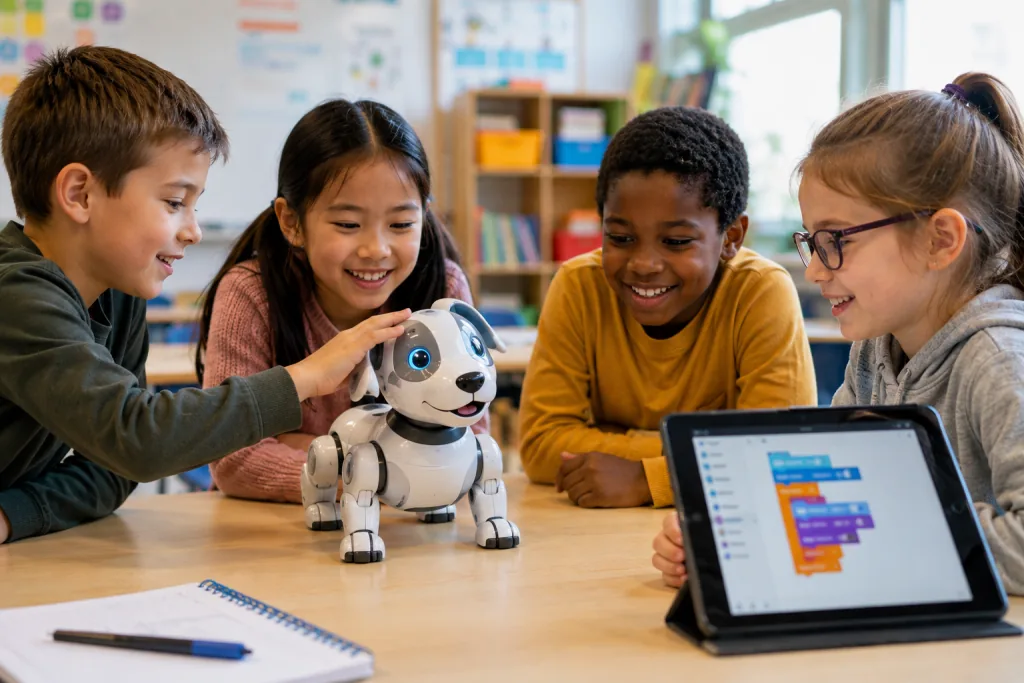
Robot pets in the classroom might initially look more like toys than educational technology. A robotic dog that responds to touch, a cat that moves when students approach, or a programmable animal that follows commands certainly has entertainment value. For educators, however, the more interesting question is what happens after the novelty wears off.
Interactive robot pets can create opportunities for students to observe, predict, communicate, collaborate, program, and solve problems. More advanced models may use sensors, microphones, cameras, motors, artificial intelligence, or programmable behaviors to respond to their environment.
The educational value doesn’t come from the robot simply being present. It comes from how teachers incorporate that responsiveness into purposeful learning activities. Used thoughtfully, robot pets can become tools for STEM instruction, social-emotional learning, language development, creative projects, and inclusive classroom participation.
What Are Robot Pets?
Robot pets are interactive machines designed to imitate some of the appearance, movements, behaviors, or social characteristics of animals. They range from relatively simple toys that respond to touch or sound to sophisticated robotic systems capable of recognizing environmental inputs, learning behavioral patterns, or interacting with users in more complex ways.
Unlike a stuffed animal, a robot pet can respond to what a student does.
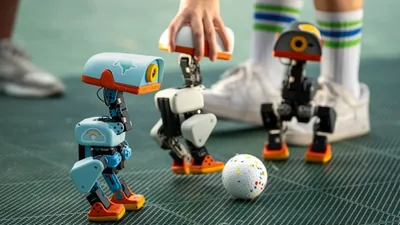
A robotic dog might move toward a sound, react when someone touches its head, avoid an obstacle, perform a programmed sequence, or produce different responses depending on sensor input. Some educational robots can also be programmed by students, turning the device itself into a hands-on introduction to coding and robotics.
This combination of physical presence and interactivity distinguishes robot pets from many screen-based educational technologies. Students aren’t only looking at information. They’re interacting with a physical system and seeing immediate consequences from their actions. That can make abstract concepts easier to investigate.
Why Robot Pets Can Be Effective Learning Tools
Engagement is one of the most obvious reasons educators may experiment with robot pets in the classroom, but engagement alone isn’t enough to make technology educationally valuable. A flashy device can attract attention without improving learning.
Robot pets become more useful when their behaviors connect directly to an instructional objective. A teacher might ask students to determine which sensors allow a robot to detect obstacles, write instructions that make it complete a particular movement, observe its behavior and develop a hypothesis, or create a story based on its actions. The robot then becomes something students investigate rather than simply watch.
Physical interaction can also change how students approach a lesson. Instead of completing every activity on a worksheet or screen, they can move around the classroom, test ideas, make adjustments, and work together around a shared object. This creates opportunities for active learning in which students participate directly in the process of figuring something out.
Robot Pets Can Make STEM Concepts More Concrete
Robotics naturally connects with science, technology, engineering, and mathematics, making robot pets particularly useful for STEM education.
Students don’t necessarily need to begin by writing sophisticated code. Even examining how a robot pet interacts with its surroundings can introduce fundamental engineering concepts.
Learning About Sensors and Inputs
A robot needs information about its environment before it can respond appropriately. Depending on the model, a robot pet may contain touch sensors, microphones, cameras, proximity sensors, accelerometers, light sensors, or other components. Teachers can use these features to introduce the concept of inputs.
Students can experiment by changing one condition at a time. What happens when the robot encounters an object? Does it react differently to a loud sound than a quiet one? Which part of the robot appears to detect touch? Can it operate in different lighting conditions?
Instead of simply being told how sensors work, students can form predictions and test them. The activity can then progress into a discussion about how humans and animals receive information through their senses and how engineers design machines to gather environmental information electronically.
Understanding Outputs and Cause and Effect
Once students understand inputs, they can investigate outputs. A robot receives information and then performs an action. It might move its legs, turn its head, produce a sound, illuminate a light, or change direction.
Teachers can represent this as a simple input-process-output relationship. A student touches a sensor, the robot’s software interprets that signal, and the robot performs a programmed behavior. That seemingly simple interaction introduces a fundamental concept in computing.
Younger students can describe these relationships verbally or through diagrams. Older students can investigate the logic, algorithms, and programming that determine how a robot selects its response.
Introducing Coding Through Visible Results
Programming becomes easier to understand when students can see their instructions affect something physical.
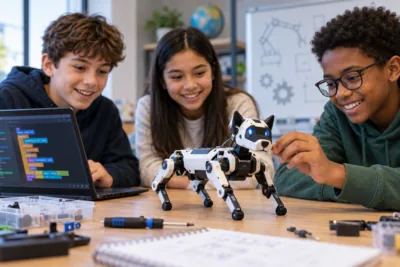
With programmable robot pets, students might create sequences telling the robot to walk forward, turn, stop, make a sound, or navigate around an obstacle. More advanced activities can introduce loops, conditional statements, variables, or sensor-based behavior.
Mistakes become part of the learning process. If the robot turns left when students expected it to turn right, they have an immediate problem to investigate. They must examine their instructions, identify the error, modify the program, and test it again.
That cycle of testing and revision closely resembles real engineering and software development.
Robot Pets Encourage Problem-Solving and Computational Thinking
One of the strongest classroom applications of robotics is teaching students how to break complicated challenges into manageable steps.
Imagine asking a group to program a robotic dog to travel from one side of a classroom obstacle course to another. “Get to the finish line” is too broad to function as a useful instruction. Students have to decompose the challenge.
They need to determine where the robot should move, how far it should travel, when it should turn, what obstacles it might encounter, and what should happen when something unexpected occurs. This process develops computational thinking even when students aren’t using advanced programming languages.
They also learn that their first solution doesn’t have to work perfectly. A robot that stops too early or collides with an obstacle provides immediate feedback. Students can use that information to refine their approach. Failure becomes observable, specific, and fixable rather than simply being represented by a wrong answer on a page.
Supporting Social-Emotional Learning With Robot Pets
Not every educational use of robot pets needs to involve coding. Their animal-like characteristics can make them useful prompts for social-emotional learning, particularly when educators want students to discuss emotions, relationships, empathy, routines, or responsible decision-making.
A teacher could create a scenario in which the classroom robot pet appears nervous about a new situation. Students might discuss what could make someone feel nervous and what another person could do to help.
The robot creates some emotional distance from the question. Students can talk about what the “pet” might feel before being asked to discuss their own experiences. That can make certain conversations feel more approachable.
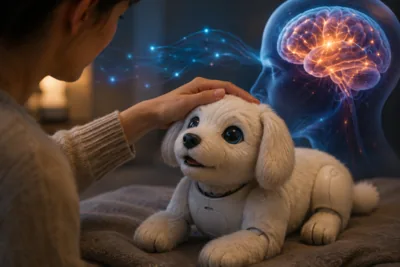
Teachers should still be careful about anthropomorphism. A robot can simulate emotional responses, but it doesn’t necessarily experience emotions in the way a person or animal does. That distinction can itself become a valuable discussion about empathy, technology, and artificial intelligence.
Creating Opportunities to Practice Communication
Robot pets can also provide useful prompts for language and communication activities.
For younger students, teachers might ask them to describe what the robot is doing using complete sentences. Students can practice action verbs, positional vocabulary, sequencing words, and descriptive language while observing movement.
For example, explaining how to guide a robot through a course requires students to use precise instructions. “Go over there” isn’t very useful. “Move forward three steps, turn right, and stop before the box” communicates considerably more information. That difference demonstrates why clear language matters.
Robot pets can also inspire writing assignments. Students might write instructions for caring for an imaginary robotic animal, create stories about its adventures, develop a user manual, or produce a persuasive argument about which features the next version should include. A single piece of classroom technology can therefore support both technical and language-based learning.
Encouraging Collaboration Instead of Individual Screen Time
Many educational technologies are designed around one student and one screen. Robot pets can create a different dynamic because several students can gather around and interact with the same physical device.
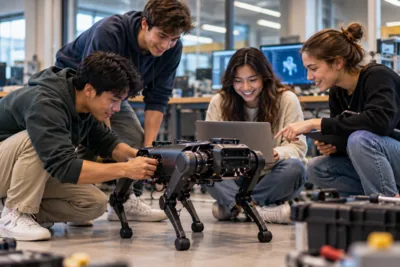
Group activities can assign students different responsibilities. One student might operate the robot while another records observations. Another could check the program, measure distances, or document problems that occur during a test.
The roles can rotate so students experience different parts of the activity. This approach gives collaboration a concrete purpose. Students aren’t working together simply because the teacher assigned a group project. They need to exchange information and coordinate decisions to make the robot accomplish something.
That creates opportunities to practice listening, explaining ideas, negotiating solutions, and responding constructively when another student’s suggestion produces a better result.
Robot Pets and Inclusive Learning
Robot pets may also provide additional ways for students to participate in classroom activities, although educators should avoid assuming that a particular technology will work equally well for every learner.
Some students may find a physical, interactive device more engaging or understandable than an abstract diagram or text-heavy explanation. A robot can provide visual movement, physical interaction, sound, and immediate feedback, giving teachers several modalities through which to present a concept.
Students who are reluctant to participate in certain group discussions may also find it easier to engage when an activity revolves around a shared object.
Accessibility still requires deliberate planning. A robot that depends heavily on audio cues may create barriers for students with hearing differences. Visual indicators may not be equally accessible to students with low vision. Fine motor controls, touch interfaces, or mobile applications can create additional challenges.
Teachers should evaluate how students actually interact with a device rather than assuming that “interactive” automatically means accessible.
Robot Pets Can Support Lessons About Artificial Intelligence
As artificial intelligence becomes more visible in everyday life, students need opportunities to understand what AI can and cannot do.
An advanced robot pet can provide a tangible starting point. Students may perceive a robot that recognizes voices, responds to gestures, or changes behavior over time as intelligent. Teachers can use that perception to ask deeper questions.
How does the robot know someone touched it? Is it actually happy when it makes a happy sound? What information does it collect? Does it understand a command, or has it been programmed to associate certain inputs with certain outputs? These questions encourage students to look beyond the surface behavior of technology.
Older students can investigate machine learning, computer vision, natural language processing, and the differences between programmed rules and systems that adapt based on data. Just as importantly, they can learn that human-like behavior from a machine shouldn’t automatically be interpreted as human-like understanding.
Robot Pets Create Opportunities for Digital Citizenship Lessons
Connected robot pets can introduce issues that go beyond robotics. A device with a microphone, camera, internet connection, mobile app, or cloud-based service may collect and transmit information. In a classroom, that makes privacy and security relevant educational and administrative concerns.
Teachers can use age-appropriate examples to explain why connected devices collect data and why users should understand what happens to that information.
Older students can consider more challenging questions. Should a robot pet need a camera to perform its function? Where is recorded information stored? Who should be allowed to access it? How long should data be retained?
These aren’t hypothetical issues. Similar questions apply to smart speakers, smartphones, security cameras, wearable devices, and other technologies students may encounter outside school. Robot pets can therefore serve as an accessible introduction to broader conversations about responsible technology use.
Using Robot Pets Across Different Subjects
One advantage of robot pets in the classroom is that they don’t have to belong exclusively to the computer science curriculum.
A math teacher could ask students to calculate distance, speed, angles, or the number of movements needed to complete a route. Students could measure how far a robot travels during each programmed step and use the results to estimate how many commands are needed to cross a particular distance.
Science lessons could examine friction, movement, energy, sensors, animal behavior, or biomimicry. Students might compare a robotic animal’s movement with that of the real animal it imitates and investigate why engineers chose a particular mechanical design.
English language arts classes can use robot pets for narrative writing, procedural writing, presentations, and vocabulary development. Art and design projects might ask students to create an improved robotic pet concept while explaining how its physical features relate to its intended purpose.
Cross-curricular use makes the technology more valuable because the robot doesn’t have to sit unused whenever the class isn’t studying programming.
The Value of Learning Through Care and Responsibility
A classroom robot pet can also become part of routines around shared responsibility. Students might be responsible for charging the robot, storing it correctly, inspecting it for damage, preparing it for an activity, or ensuring accessories are returned after use. These tasks are small, but they introduce an important idea: technology requires maintenance.
Children often encounter finished consumer devices without thinking about what keeps those systems operational. Managing a classroom robot provides an opportunity to discuss batteries, charging, software updates, mechanical wear, cleaning, storage, and troubleshooting. Teachers can connect these routines to broader conversations about taking care of shared classroom resources.
At the same time, educators should avoid treating responsibility for a machine as identical to caring for a living animal. Feeding a class pet, understanding its biological needs, and respecting animal welfare involve responsibilities that a robot can’t reproduce. That difference can become educational in its own right.
Robot Pets Aren’t Replacements for Real Animals or Human Interaction
The appeal of robot pets can lead to exaggerated expectations. A robotic animal doesn’t provide the same experience as interacting with a living animal. It doesn’t have biological needs, genuine emotions, independent motivations, or the complex behavior of a real pet.
That limitation can actually make robot pets more practical in certain classrooms. They don’t trigger animal allergies, require feeding, need veterinary care, or create the same animal welfare considerations associated with keeping a live classroom pet.
But those practical advantages shouldn’t turn into claims that robotic interaction can replace meaningful relationships. Similarly, a robot used for social-emotional activities shouldn’t become a substitute for teachers, counselors, peers, or other human support.
The strongest classroom role for robot pets is usually as a learning tool that helps facilitate interaction, not as a replacement for it.
Challenges Schools Should Consider Before Using Robot Pets
The educational possibilities are appealing, but schools need to consider practical limitations before purchasing devices.
Cost is an obvious factor. More advanced robots can be expensive, and the initial purchase price isn’t necessarily the full cost. Schools may eventually need replacement components, batteries, subscriptions, compatible devices, software, or technical support.
Durability matters in a classroom where equipment may pass through many hands every day.
Privacy deserves particular scrutiny when a robot contains cameras, microphones, cloud connectivity, or user accounts. Schools should understand what information the product collects, where it goes, and whether its data practices comply with applicable school policies and privacy requirements.
Teachers also need time to learn the technology. A robot with impressive capabilities provides little educational value if staff doesn’t know how to integrate it into lessons. Professional development and ready-to-use instructional activities may matter as much as the device’s technical specifications.
How Teachers Can Use Robot Pets Effectively
Successful classroom robotics begins with the learning objective, not the robot.
Instead of asking, “What can we do with this robot?” teachers can start with a specific goal. If students are learning sequencing, the robot becomes a way to demonstrate sequencing. If they’re studying measurement, its movement becomes something to measure. If they’re practicing descriptive writing, its behavior becomes the subject. This approach prevents the technology from becoming an isolated novelty.
Activities should also leave room for students to experiment rather than requiring them to follow perfectly scripted instructions every time. Robotics becomes especially valuable when students can predict what will happen, test an idea, observe an unexpected result, and revise their thinking.
Reflection completes the process. After an activity, students should be able to explain not only what the robot did but why they think it happened, what they changed, and what they would try next. That turns interaction into learning.
How to Choose a Robot Pet for the Classroom
Schools don’t necessarily need the most advanced robot available. The right choice depends on student age, curriculum goals, accessibility requirements, technical support, and budget. A simple programmable robot may provide considerably more educational value than an expensive AI-powered model if it aligns better with what students are expected to learn.
For younger students, durability and intuitive controls may be more valuable than sophisticated programming features. Older students may benefit from access to coding interfaces, sensor data, programmable behaviors, or opportunities to modify how the robot operates.
Schools should also consider whether essential functions require an ongoing subscription or internet connection. Privacy policies deserve review before purchase, particularly when products use cameras, microphones, accounts, or cloud services.
Finally, teachers should consider what happens after the first month. A good classroom robot should support multiple activities and increasing levels of complexity rather than providing one entertaining experience that students quickly outgrow.
Measuring Whether Robot Pets Actually Improve Learning
Student excitement isn’t enough to determine whether a classroom technology works. Teachers can evaluate robot pet activities using the same evidence they would use for other instructional methods.
If the objective is coding, can students successfully apply sequencing or conditional logic after the activity? If the lesson focuses on communication, can they give clearer procedural instructions? If students are learning engineering concepts, can they explain how sensors and outputs work?
Educators can compare student work before and after activities, review reflections, observe collaboration, or use short assessments tied to specific learning objectives. This helps separate novelty from meaningful educational impact.
It can also reveal where robot pets aren’t helping. If students spend most of a lesson trying to connect the device to Wi-Fi or arguing over who gets to touch it, the activity may need redesigning regardless of how impressive the technology appears.
The Future of Robot Pets in Education
Robot pets are likely to become more capable as robotics, sensors, conversational AI, and machine learning continue to develop.
Future classroom robots may respond more naturally to speech, adapt activities to individual learners, recognize gestures, demonstrate more sophisticated movements, or provide teachers with new ways to create interactive simulations.
Greater capability will also create more complicated questions. Schools will need to think carefully about student data, AI transparency, emotional attachment to machines, algorithmic behavior, accessibility, and the appropriate role of automated systems in education. Those questions make technological literacy even more important.
Students shouldn’t only learn how to operate intelligent machines. They should learn how to question them, understand their limitations, recognize when technology is collecting information, and make informed decisions about when automation is useful.
Making Robot Pets Meaningful in the Classroom
Robot pets in the classroom can make lessons more interactive, but their educational value depends far more on instructional design than technological sophistication.
Used purposefully, they can help students investigate sensors, practice coding, develop computational thinking, communicate more precisely, collaborate with classmates, explore artificial intelligence, and connect abstract concepts with physical experiences.
They can also provide creative entry points into social-emotional learning and interdisciplinary projects while giving educators alternatives to purely screen-based activities.
The goal isn’t to make every classroom activity robotic. Students still need books, discussion, experimentation, creative play, outdoor experiences, teachers, and meaningful interaction with other people.
Robot pets work best when they add something those methods don’t provide. When a responsive physical machine helps students test an idea, see the result, question what happened, and try again, robot pets in the classroom can turn technology from something students merely consume into something they actively investigate.