
If Ameca is about expression, Digit is about getting real work done. This is the kind of humanoid robot you’ll see moving boxes in warehouses, walking across factory floors, and handling repetitive tasks that humans usually avoid.
It doesn’t try to look human in the face—it focuses on moving like one. And that choice makes a huge difference in what it can actually do.
About Digit by Agility Robotics

| Manufacturer | Agility Robotics |
| Model Name | Digit |
| Color | Teal, grey, black (industrial design) |
| Dimensions | ~1.75 m (5’9″) tall |
| Weight Specifications | ~65 kg |
| Batteries | Rechargeable battery system (industrial use) |
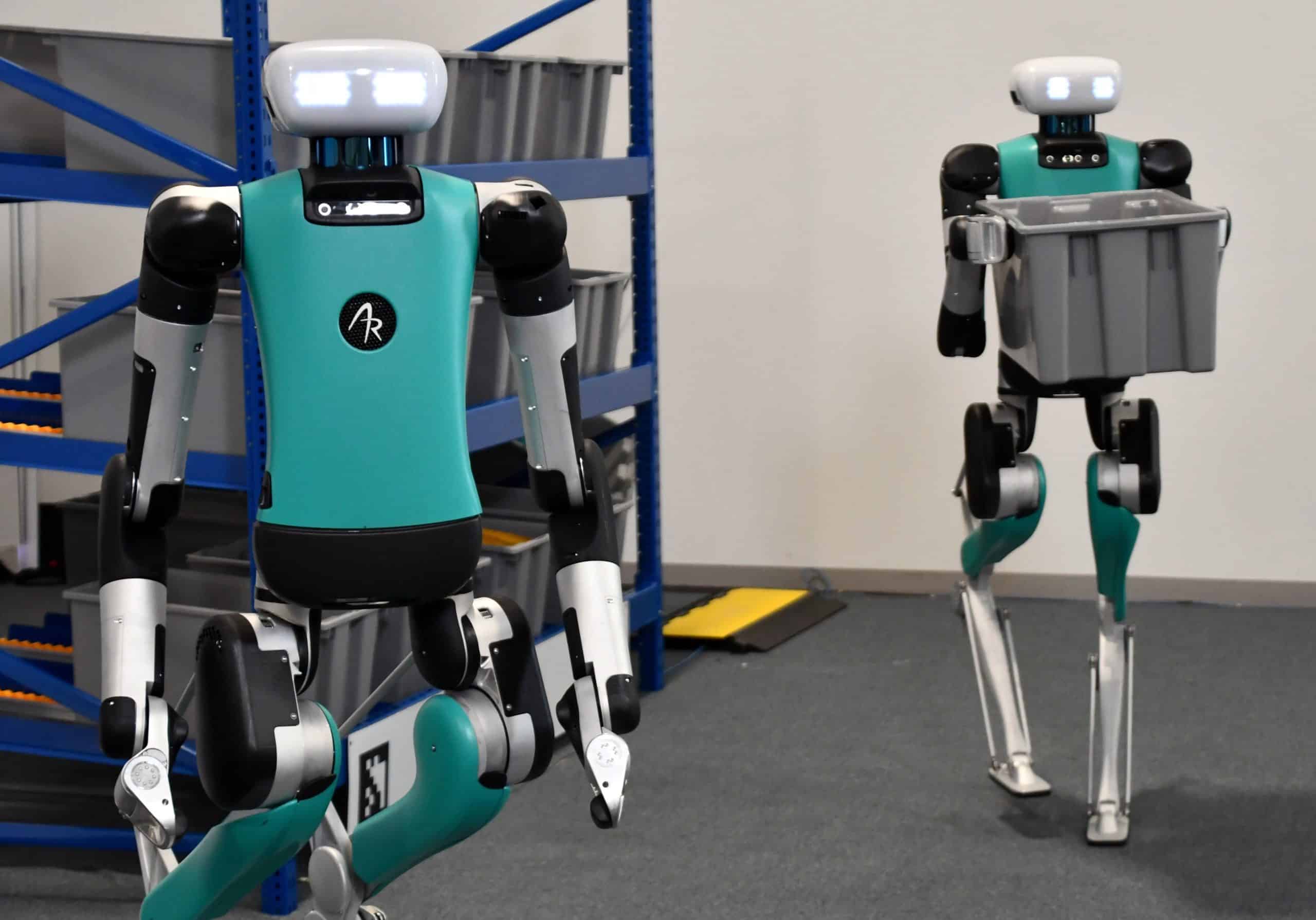
Digit is a humanoid robot developed by Agility Robotics, a US-based robotics company focused on building practical automation systems. Unlike social robots, Digit was designed specifically for logistics and industrial environments. Its human-like shape allows it to operate in spaces built for people—walking through doorways, navigating warehouses, and handling objects like bins and packages.
It’s already being deployed in real-world settings. Companies like GXO and Amazon have tested or used Digit in facilities, and it has even been hired for manufacturing work in automotive production. The goal here is simple: handle repetitive, physically demanding tasks at scale.
Digit by Agility Robotics Benefits
Built to Work in Human Spaces
Digit’s biggest advantage is its form factor. It walks on two legs, which means it can go where humans go—stairs, narrow walkways, and standard warehouse layouts. This removes the need to redesign facilities around robots. Instead, the robot adapts to the environment.
Handles Repetitive Physical Tasks Efficiently
The robot is designed to pick up and move items like totes and packages. It can carry loads and transport them across a facility without needing constant supervision. This kind of work is exactly where automation has the most impact—tasks that are physically tiring and highly repetitive.
Real-World Deployment Is Already Happening
Digit isn’t stuck in a lab. It’s already working in logistics environments and has completed large-scale tasks like moving thousands of items in warehouses. It shows the technology is practical, not just experimental.
Designed for Scalability
Digit is part of a broader system that includes cloud software (Agility Arc) and fleet deployment. Companies can deploy multiple units and manage them as a coordinated workforce, which is where the real efficiency gains come in.
Helps Address Labor Gaps
Warehousing and manufacturing often struggle with staffing shortages. Digit is positioned to fill those gaps by taking on physically demanding roles. It’s being used as a complement to human workers rather than a replacement.
Pros and Cons of Digit by Agility Robotics
| Pros | Cons |
|---|---|
| ✔️ Agile bipedal movement ✔️ Can perform repeating tasks ✔️ Can navigate various terrains ✔️ Great for industrial applications | ✖️ Lacks a realistic appearance ✖️ Limited human-to-robot interaction |
What People Are Saying About It
Industry experts tend to focus on how practical Digit is compared to other humanoid robots. It’s often described as one of the first humanoids that actually delivers measurable value in real-world operations. There’s also a lot of attention on its role in solving labor shortages. Companies see it as a way to keep operations running smoothly without over-relying on human workers for physically demanding jobs.
At the same time, there are ongoing discussions about how humanoid robots will integrate with human teams, especially in terms of safety and long-term impact on jobs.
The new Digit robot can “reach higher, carry more, last longer, charge faster and convey intent” better than the previous model. In addition, it’s better at manipulating its surroundings, and it has keener perception and is better at human-robot interactions.
Will Shanklin – Engadget
Digit by Agility Robotics
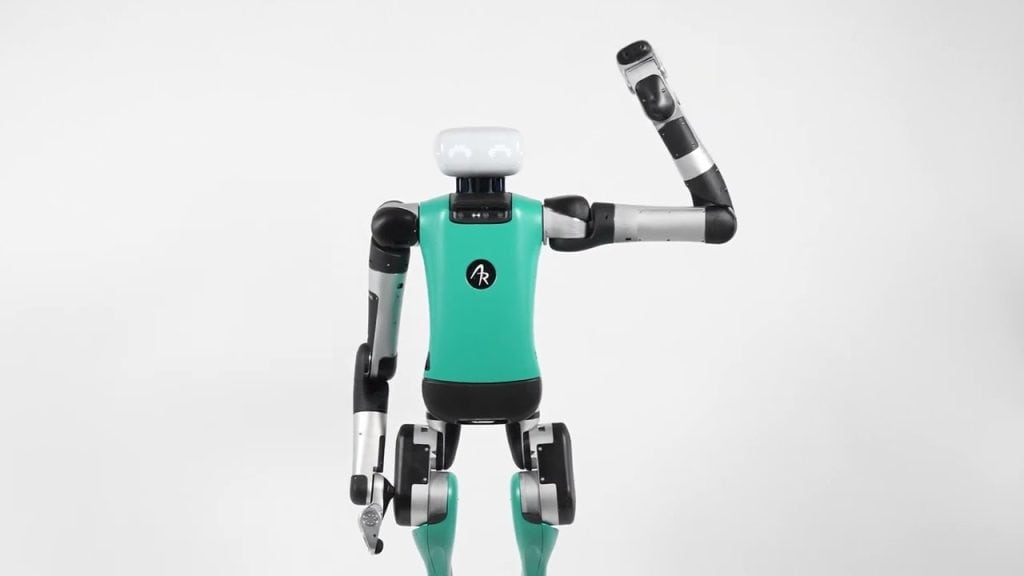
Digit represents a different direction for humanoid robots.
Instead of focusing on appearance or social interaction, it’s built to solve specific problems in logistics and manufacturing. Its ability to operate in human-designed environments makes it immediately useful without requiring major changes to infrastructure.
It’s still evolving, but it already shows what practical humanoid robotics looks like when it moves beyond demos and into real work.