
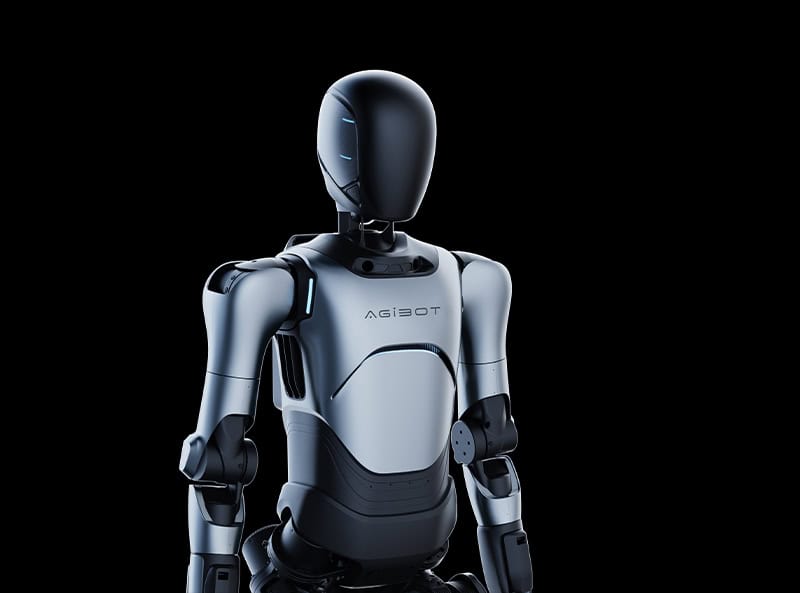
Human robots, often called humanoid robots, represent one of the most ambitious areas in robotics. Unlike robot pets, which are designed around interaction styles or environments, human robots are built to replicate human form, movement, and task capability. But what makes them truly important isn’t just how they look. It’s what they’re designed to do. From assisting in factories to interacting with people in service roles, human robots sit at the intersection of engineering, artificial intelligence, and real-world applications.
This guide breaks down everything you need to know, from how humanoid robots work to their benefits, types, limitations, and how to evaluate them properly.
What Is a Human Robot?
A human robot, or humanoid robot, is a robotic system designed to resemble the structure of the human body. This typically includes a head, torso, arms, and legs, allowing the robot to perform tasks in environments built for humans.
The goal is not just appearance. It’s functional compatibility. Human environments are designed around human movement: doors, tools, stairs, and workspaces all assume a human shape and range of motion. By replicating that structure, humanoid robots can operate in those environments without requiring major redesign.
Some well-known examples include Tesla Optimus and Boston Dynamics Atlas, both of which are designed to perform complex physical tasks.
How Human Robots Work
Human robots operate through a layered system of perception, decision-making, and physical execution, similar to other robots, but significantly more complex due to the number of moving parts and required coordination.
Sensors, such as cameras, depth sensors, and force sensors, collect data about the environment. This information is processed by onboard systems that interpret objects, distances, and tasks. The robot then decides how to act and sends commands to actuators, which control movement in joints across the body.
The challenge lies in coordination. Walking, for example, requires constant balance adjustment, weight distribution, and real-time correction. Manipulating objects requires fine motor control in the hands, often involving dozens of small movements working together. Advanced humanoid robots combine this with AI systems that allow them to:
- Recognize objects
- Plan actions
- Adapt to changing environments
The result is a system capable of performing tasks that would otherwise require human intervention.
Benefits of Human Robots
Human robots provide value not just through automation, but through compatibility with human systems and environments.
Operate in Human-Centered Environments
Most automation systems require specialized setups. Humanoid robots, by contrast, are designed to work in existing spaces. They can:
- Use tools designed for human hands
- Navigate stairs and uneven surfaces
- Interact with equipment without modification
This reduces the need for infrastructure changes, making them more adaptable across industries.
Handle Repetitive and Physically Demanding Tasks
In industrial settings, humanoid robots can take on tasks that are repetitive, physically demanding, or hazardous, such as:
- Lifting and moving objects
- Performing assembly tasks
- Operating in environments that may be unsafe for humans
Their human-like form allows them to perform these tasks in ways that align with existing workflows.
Expand Capabilities in Service Roles
Humanoid robots are increasingly being explored in service environments like retail, hospitality, and customer interaction. Their ability to communicate, gesture, and interact in a human-like way makes them suitable for roles that require more than just mechanical function.
Support in Healthcare and Assistance
In healthcare, humanoid robots have the potential to assist with patient care, monitoring, and support tasks. While still developing, this area highlights how humanoid robots can extend human capability rather than replace it.
Types of Human Robots
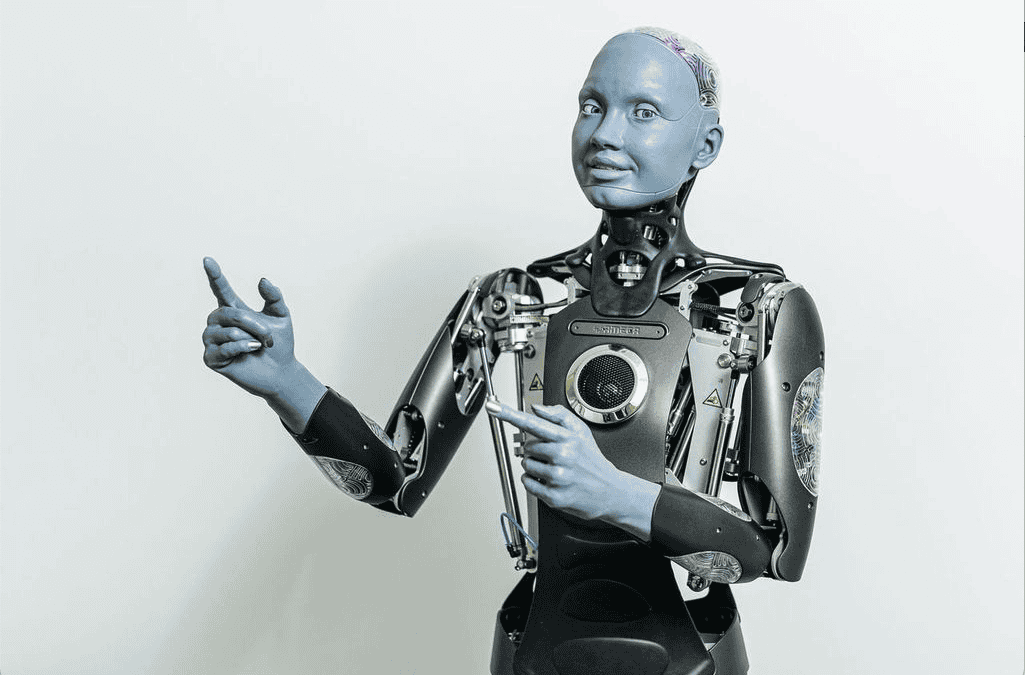
Human robots differ less by appearance and more by what they are optimized to do in real environments. The same human-like form can be engineered for strength, communication, research flexibility, or social interaction. Understanding that distinction is key, because a robot that excels in one category will often perform poorly in another.
Industrial Humanoid Robots
Industrial humanoid robots are designed to perform physical work in spaces already built for humans. Their value comes from compatibility with existing workflows. These systems prioritize load handling, repeatable motion, and endurance. A robot operating in a warehouse, for example, must be able to pick up objects, carry them across uneven surfaces, and place them accurately, all while maintaining balance. This requires precise control of weight distribution and joint coordination.
Unlike traditional industrial robots that are fixed in place, humanoid systems can move between tasks. That flexibility allows them to operate in environments that haven’t been redesigned for automation, which is where their real advantage lies.
Service Humanoid Robots
Service robots are built for environments where interaction matters as much as function. These include hospitality, retail, and front-facing roles where communication, gestures, and responsiveness shape the experience. The robot must not only perform tasks but also do so in a way that feels understandable and approachable to humans. This includes maintaining eye-level engagement, using gestures that align with speech, and responding in a way that feels timely and appropriate.
A technically capable robot that fails at interaction will not succeed in this category. Here, perception and communication are just as important as mechanical ability.
Social and Companion Humanoid Robots
These robots are designed for relationship-driven interaction, often in educational, therapeutic, or entertainment contexts. The focus shifts from task execution to engagement quality. Movement becomes softer, responses become more predictable, and behavior is designed to feel consistent rather than efficient. In many cases, these robots are used to encourage communication, support learning, or provide a sense of presence.
What matters most is how the robot responds over time. Small inconsistencies or overly mechanical behavior become noticeable quickly in this context, because the interaction is more personal and repeated.
Research and Development Platforms
Research humanoid robots are not built for a single purpose. They’re designed to test and refine capabilities across movement, perception, and AI. These platforms prioritize flexibility over optimization. They may not perform any one task as efficiently as a specialized robot, but they allow researchers to experiment with new control systems, materials, and interaction models.
This category is where most breakthroughs happen. Improvements in balance, dexterity, and autonomy often start here before being adapted into industrial or service-focused systems.
What Makes a Human Robot Good
A good human robot is not defined by how closely it looks like a person, but by how well it operates within human constraints. Every movement, decision, and interaction must align with the physical and functional demands of real-world environments.
Balance and Mobility That Adapts in Real Time
Walking is one of the hardest problems in humanoid robotics because it requires constant adjustment. Every step changes the robot’s center of gravity, and the system must compensate instantly to avoid falling. A strong humanoid robot doesn’t just walk. It adapts. It can handle uneven surfaces, adjust stride length, and recover from small disturbances without stopping. This continuous correction is what separates controlled movement from rigid, pre-programmed motion.
Dexterity That Extends Beyond Simple Gripping
Hands are where humanoid robots either succeed or fail in practical tasks. It’s not enough to pick something up. The robot must control pressure, orientation, and movement simultaneously. This includes:
- Handling objects of different shapes and weights
- Using tools designed for human hands
- Adjusting grip dynamically during movement
True dexterity comes from combining mechanical precision with real-time feedback, allowing the robot to respond to what it’s holding rather than following a fixed motion.
Perception That Interprets, Not Just Detects
Sensors alone don’t create awareness. A humanoid robot must interpret what it sees and decide what matters. This means recognizing objects, understanding spatial relationships, and distinguishing between relevant and irrelevant inputs. In a cluttered environment, the robot needs to identify what it’s supposed to interact with and ignore everything else. Without this level of perception, even the most advanced hardware becomes limited.
System Coordination That Feels Unified
Every part of a humanoid robot, movement, perception, and decision-making, must operate as a single system. If vision detects an object but movement lags, or if decisions are made without accounting for balance, the system breaks down. Coordination ensures that actions are executed smoothly, with each component supporting the others. This is what allows a robot to perform complex tasks without appearing fragmented or mechanical.
Key Features That Matter
Humanoid robots rely on a small number of core systems, but each must operate at a high level. These features determine whether the robot can function reliably outside controlled environments.
Sensor Systems That Build a Usable Model of the World
Sensors provide raw data, but what matters is how accurately that data represents the environment. Cameras, depth sensors, and force sensors must work together to create a consistent understanding of space, objects, and interaction points.
Poor sensor integration leads to uncertainty. The robot may detect objects but fail to interact with them correctly, which limits its usefulness.
Actuator Design That Balances Strength and Precision
Actuators control every movement, from walking to hand motion. They need to deliver both power and control, which is a difficult balance. Too much emphasis on strength can reduce precision, while overly delicate systems may lack the force needed for real tasks. The best human robot designs achieve both, allowing the robot to move smoothly while still handling physical workloads.
AI and Control Systems That Enable Decision-Making
Control systems determine how the robot processes information and acts on it. This includes motion planning, object recognition, and task execution. Advanced systems allow the robot to adapt rather than repeat fixed sequences. This adaptability is what enables humanoid robots to operate in environments that are not perfectly predictable.
Power Systems That Support Continuous Operation
Energy is a limiting factor for humanoid robots. Movement, processing, and sensing all require significant power. A strong system balances performance with efficiency, ensuring that the robot can operate long enough to complete meaningful tasks without frequent interruption.
Limitations to Be Aware Of
Humanoid robots are among the most complex machines being developed, and that complexity introduces real constraints. Movement, while impressive, still requires constant correction and significant energy. Dexterity continues to improve, but it does not yet match the flexibility and adaptability of human hands. Costs remain high because of the precision required in both hardware and software.
They are also purpose-driven systems. Most humanoid robots today are designed for specific environments or tasks, not general, all-purpose use. Expecting them to function like humans across all scenarios leads to unrealistic expectations. Understanding these limitations helps frame what humanoid robots currently do well, and where they are still evolving.
How to Choose the Right Human Robot (or Evaluate Them)
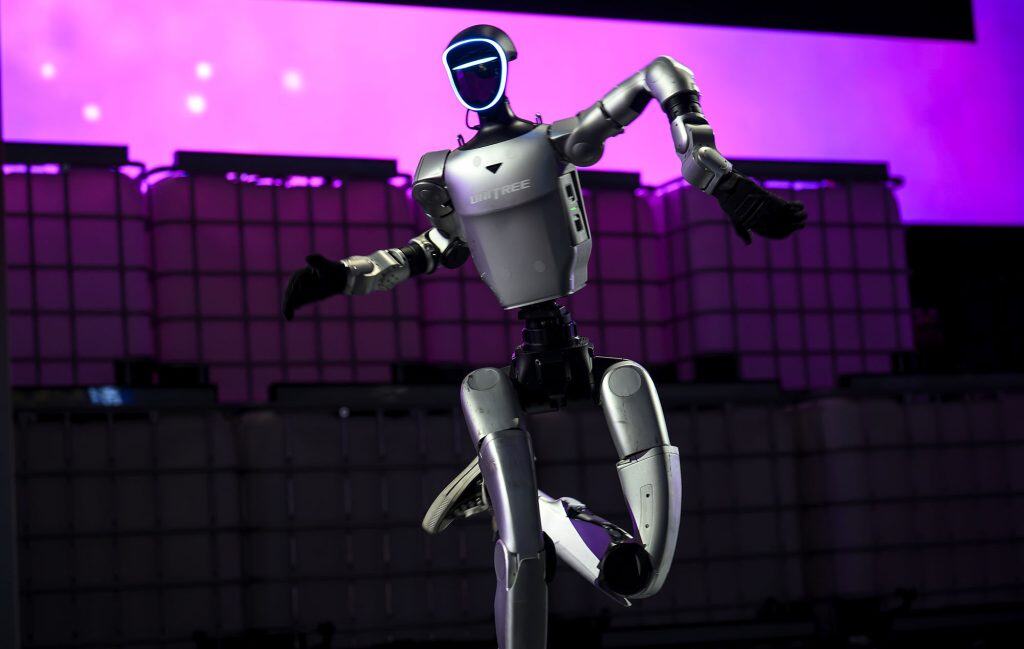
Choosing a humanoid robot is not about comparing features. It’s about matching capability to context.
For Industrial Use
Focus on reliability, load handling, and movement stability. The robot should perform tasks consistently under real conditions, not just in controlled demonstrations.
For Service and Interaction Roles
Evaluate communication quality and responsiveness. The robot should interact in a way that feels natural and predictable, especially in environments where human experience matters.
For Research and Development
Flexibility is the priority. The system should allow modification, experimentation, and integration with new technologies.
For Long-Term Deployment
Look at consistency over time. Performance should remain stable across repeated use, without significant degradation in movement, perception, or responsiveness.
The best humanoid robot is not the most advanced on paper. It’s the one that performs reliably in the environment it was designed for.
The Future of Human Robots
The development of humanoid robots is moving toward greater integration with human environments, not just improved hardware. Future progress will likely focus on refining movement so it becomes more energy-efficient and adaptable, improving hand dexterity to handle a wider range of tasks, and advancing AI systems so robots can make better decisions in complex situations.
What will change most is not just capability, but usability. As systems become more reliable and easier to deploy, humanoid robots will shift from experimental platforms to practical tools used alongside humans in everyday settings.
Final Thoughts
Human robots represent one of the most complex and promising directions in robotics. They’re not defined by appearance alone, but by their ability to function within the same physical and operational constraints as humans. As their systems continue to improve, their role will expand, not as replacements, but as tools that extend what humans can do.
Frequently Asked Questions About Human Robots
Are humanoid robots currently practical?
They’re already practical in specific industries, particularly where tasks align with their strengths, such as repetitive physical work or structured environments.
Can humanoid robots replace humans?
They’re designed to augment human capability, not replace it entirely. Most current systems are best used alongside human workers rather than independently.
Are humanoid robots safe to work with?
Modern humanoid robots are built with safety systems, but safe operation depends on proper design, testing, and environment. Safety is an ongoing focus in development.