Robots Steal the Spotlight at China’s Spring Festival Gala
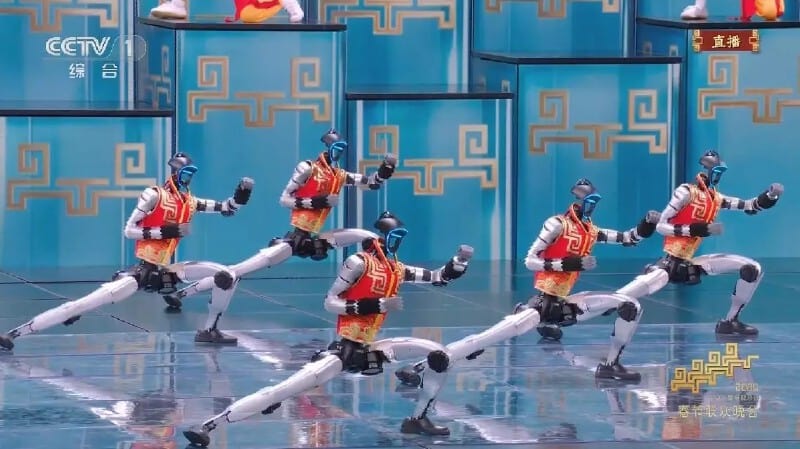
At China’s 2026 Spring Festival Gala — the country’s most-watched annual entertainment event — humanoid robots captivated audiences with a performance that blurred the line between technology demonstration and cultural spectacle. The robots took centre stage alongside young martial artists, executing sophisticated routines that symbolized how far Chinese robotics has come in just a short time.
During the televised show, dozens of AI-powered humanoids performed choreographed martial arts, including synchronized kicks, punches, flips, and even sequences that mimicked traditional styles such as “drunken boxing.” Viewed by hundreds of millions globally, the display wasn’t just for show — it was a carefully staged demonstration of growing capabilities in robotics and automation.
From Novelty to Technological Showcase
Just a year ago, robots at similar events performed simple dances and basic synchronized movements. This year’s gala performance featured far more advanced motion control and coordination, highlighting rapid iteration in artificial intelligence, sensor systems, and mechanical design. Researchers and tech observers noted that such fluid routines — once considered futuristic — are now becoming reality for robots developed by Chinese companies.
Robotics startups, including Unitree, MagicLab, Galbot, and Noeti,x were among those represented, underscoring the depth of China’s innovation in this space. Beyond mere entertainment, analysts see these moments onstage as evidence that robotics technology is progressing toward real-world applications far beyond entertainment — from industrial automation to service and companion robots.
A Symbol of National Innovation
Many observers also view the gala’s robot segment as part of a broader narrative about China’s ambition to lead in next-generation technology. By putting humanoid robots on one of the most-watched broadcasts of the year, the industry — and the government — signaled confidence in the progress being made. While questions remain about when robots will be widely adopted in everyday life, the performance showcased the potential of these machines to impress, inspire, and perhaps eventually assist humans in more practical roles.