

Robot cats have evolved far beyond novelty gadgets. What used to be simple motorized toys has developed into a category that now spans therapeutic tools, AI-driven companions, and intelligent interactive devices.
If you’re researching robot cats, you’re not just looking for a product; you’re trying to understand whether these devices can realistically provide companionship, engagement, or stimulation in a way that fits your needs. This guide breaks down everything that matters, from how robot cats actually work to how different types perform in real-world use.
What Is a Robot Cat?
A robot cat is a physical device designed to simulate specific aspects of feline behavior: movement, responsiveness, sound, and in some cases, emotional interaction. The important distinction is this: robot cats are not built to replicate the full experience of owning a real animal. They are engineered to reproduce targeted parts of that experience.
For example, therapy-focused robot cats are designed to trigger emotional responses such as comfort or calmness. They achieve this through predictable behaviors: gentle purring, subtle head movement, and touch responsiveness. The goal is not realism for its own sake, but emotional familiarity.
On the other end of the spectrum, interactive robot cats are designed around stimulation. Their movements are deliberately erratic or responsive in ways that trigger curiosity or play behavior, especially in children or real pets.
Understanding this distinction is critical because most disappointment with robot cats comes from mismatched expectations. A device designed for therapy will feel underwhelming as a toy. A toy will feel shallow if you expect emotional companionship.
How Robot Cats Work
To understand why some robot cats feel engaging, and others feel flat, you need to look at how they’re built.
Sensors Determine Responsiveness
Touch sensors are the most important component. Higher-quality models can detect where and how they are being touched, allowing for more nuanced responses. Basic models use simple on/off triggers. More advanced ones can differentiate between light strokes and firm pressure, which makes the interaction feel less binary.
Motion and proximity sensors add another layer. They allow the robot cat to react even when you’re not touching it, creating the impression of awareness.
Movement Systems Define Realism
The quality of movement is determined by the motors and how they are programmed. Cheap models often use abrupt, segmented motion. You’ll notice this immediately. It feels mechanical and breaks immersion.
Higher-end models use smoother transitions and slower movement cycles. This is what creates the illusion of lifelike behavior. Even small improvements here significantly affect perceived quality.
Sound Design Reinforces Interaction
Purring is not just an added feature. It’s a feedback mechanism. It confirms that the robot is responding to you. Poor sound design can make the interaction feel artificial. Repetitive or overly loud sounds reduce realism. Subtle, varied audio is far more effective.
Software Determines Behavior Depth
This is where the biggest differences emerge. Basic models loop through a limited set of behaviors. Once you’ve seen them all, the experience becomes predictable.
More advanced models introduce variation, either through randomization or adaptive logic. This doesn’t make them intelligent in a human sense, but it prevents the interaction from feeling static.
Benefits of Robot Cats
Robot cats provide value by solving specific, real-world challenges around companionship, care, and accessibility. Their benefits come from how they balance emotional interaction with control and predictability, something that’s difficult to achieve with live pets in many modern environments.
Emotional Companionship Without Responsibility
One of the most immediate benefits of robot cats is that they offer companionship without introducing dependency. Traditional pet ownership requires a fixed level of commitment: feeding schedules, grooming, veterinary care, and daily attention. These responsibilities don’t scale down easily, which is why many people opt out entirely.
Robot cats remove that barrier while preserving the core experience people are looking for: interaction and presence. You can engage with them when you want, without needing to plan your routine around their needs. This makes them particularly valuable for individuals with demanding schedules, frequent travel, or limited capacity for long-term commitments.
What strengthens this benefit is predictability. The interaction is always available, and it doesn’t fluctuate based on mood, energy levels, or environment. That reliability makes companionship feel accessible rather than conditional.
Safe and Scalable Support in Care Environments
In care settings, robot cats provide a controlled way to introduce emotional engagement without the operational challenges of live animals. Facilities need to manage hygiene, safety, and consistency across multiple users, something that becomes complex with real pets.
Robot cats simplify this. They can be cleaned, shared, and used repeatedly without risk of injury, allergies, or unpredictable behavior. This makes them easier to integrate into structured care routines. More importantly, they provide consistent interaction, which is critical in environments involving cognitive decline.
For individuals with dementia, familiarity and repetition can be grounding. A robot cat that responds the same way to the same interaction helps reinforce that stability, encouraging engagement without confusion. This consistency also allows caregivers to use robot cats as part of a broader support strategy, whether to calm agitation, encourage communication, or create moments of focus and interaction.
Encourages Interaction Without Pressure or Complexity
Another key benefit is how robot cats lower the threshold for interaction. Real pets require understanding, patience, and sometimes training. Robot cats, on the other hand, are designed to respond in simple, intuitive ways. This makes them easier to approach, especially for:
- Individuals who may feel overwhelmed by unpredictable behavior
- Children who are still learning how to interact with animals
- Users who prefer low-effort engagement
The interaction feels immediate and accessible. You touch the robot, and it responds. There’s no learning curve or uncertainty about how it will behave. Over time, this ease of use encourages more frequent interaction, which is where the real value builds.
Introduces Technology in a Tangible, Human-Centered Way
Robot cats also serve as an accessible entry point into interactive technology. While AI and automation can feel abstract, robot pets make these concepts physical and visible. Users aren’t just observing technology. They’re engaging with it through touch, movement, and response. This creates a more intuitive understanding of how systems react and adapt, especially for younger users or those less familiar with digital interfaces.
Unlike screen-based interaction, robot cats provide a physical presence, which makes the experience feel more grounded. This blend of technology and tactility is what makes them effective not just as devices, but as interactive companions.
Types of Robot Cats
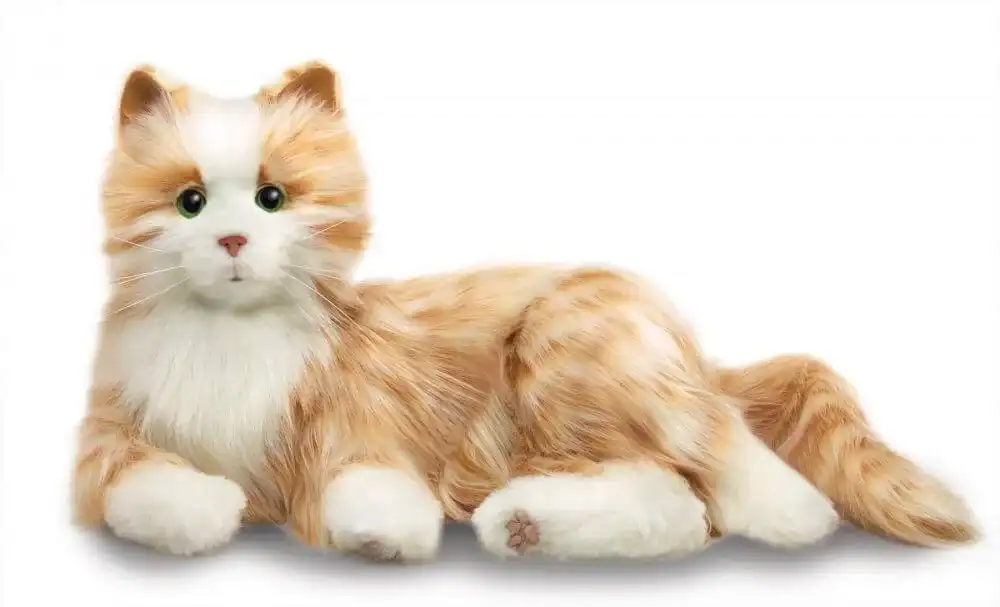
Companion and Therapy Robot Cats
These are engineered to mimic the sensory experience of holding or interacting with a real cat.
The fur is intentionally soft and weighted to replicate the feeling of a living animal resting on your lap. The internal motors are tuned for slow, minimal movements, slight head turns, subtle body shifts, because exaggerated motion would break the illusion.
The most important feature is touch responsiveness. When you stroke the cat, it responds with purring or movement. This creates a feedback loop that reinforces the sense of interaction.
Where these models succeed is in emotional grounding. They are particularly effective in quiet, low-stimulation environments where subtle interaction has more impact. In a noisy or fast-paced setting, their effects are less noticeable.
Interactive Robot Cats
These prioritize motion over realism. The movements are often quicker, less natural, and intentionally unpredictable. This is not a flaw, but a design choice. The goal is to trigger engagement through novelty and reaction.
For children, this creates a sense of play. For real cats, it mimics prey behavior. Sudden stops, direction changes, and irregular movement patterns are more effective at sustaining attention than smooth, lifelike motion.
The limitation of this category is that engagement is short-cycle. The interaction is stimulating, but not emotionally grounding. Over time, novelty wears off unless the device introduces variation.
AI-Powered and Smart Robotic Cats
AI-powered robot cats attempt to introduce variation and adaptation. They may recognize voices, respond differently based on interaction patterns, or change behavior over time. In practice, the value of these features depends heavily on execution. Basic implementations can feel gimmicky, like pre-programmed responses disguised as intelligence. More advanced systems, however, can create a stronger sense of presence by reducing repetition.
The real advantage here is not intelligence in the human sense, but variability. Even small changes in response patterns can make the interaction feel less mechanical.
What Makes a Robot Cat Good
Most product pages overwhelm you with features: number of sensors, sound modes, AI claims, app integrations. None of that tells you whether the robot cat will actually feel engaging after a few days. The real evaluation of the best robot cats comes down to interaction quality over time. That means looking at how the device behaves moment-to-moment, not what it promises on the box.
Responsiveness
Responsiveness isn’t just about whether the robot reacts. It’s about how quickly, how accurately, and how consistently it responds. When you stroke a real cat, the feedback is immediate and proportionate. A slight touch produces a subtle reaction. A firmer stroke might trigger movement or sound. Your brain expects this kind of cause-and-effect relationship.
Lower-quality robot cats break this loop in three common ways:
- There’s a noticeable delay between touch and response
- The response is always the same regardless of input
- The sensor fails to trigger reliably
These issues create friction in the interaction. You become aware that you’re dealing with a device rather than something responsive.
Higher-quality models reduce this gap. They respond quickly, and more importantly, they respond appropriately. If you stroke the head, the reaction feels localized. If you stop interacting, the behavior gradually settles instead of abruptly stopping. That continuity is what makes the experience feel coherent rather than mechanical.
Movement Quality
Movement is the fastest way to tell whether a robot cat is well-designed. The problem isn’t whether it moves. It’s how it moves.
Cheap models rely on simple motor cycles: turn → stop → turn → stop. This creates segmented motion that feels robotic in the worst way. There’s no transition between actions, just abrupt changes. Better models focus on motion flow. Instead of discrete actions, they simulate continuous movement. The head doesn’t snap from one position to another. It gradually shifts. The body subtly adjusts rather than jolting.
Timing also plays a role. Real animals don’t move in fixed intervals. There are micro-pauses, slight variations, and irregular rhythms. When a robot cat introduces even small inconsistencies in timing, it feels significantly more natural. This is why a robot with fewer movements can feel more realistic than one with dozens of programmed actions. Execution matters more than quantity.
Interaction Depth
The biggest drop-off in user satisfaction happens after the first few interactions. Once you’ve seen the behavior set, the experience either holds up, or it doesn’t. This is where interaction depth becomes critical.
Basic robot cats operate on short loops. You trigger a response, it plays out, and then resets. After a while, you start anticipating every reaction. That predictability reduces engagement. More advanced models extend this by introducing variation. This doesn’t require complex AI. It can come from:
- Randomized response patterns
- Multiple reaction intensities
- Idle behaviors that change over time
For example, instead of always purring when touched, the robot might sometimes shift position first, then respond. These small variations prevent the interaction from feeling scripted.
True longevity comes from behavior layering. The robot doesn’t just react. It transitions between states. It can be idle, alert, responsive, or settling down, with subtle differences between each. That’s what keeps the experience from collapsing into repetition.
Sensory Feedback
Most buyers focus on movement and sound, but tactile feedback is just as important, especially for companion models. Weight distribution, fur texture, and even warmth (in some advanced designs) affect how convincing the experience feels.
A robot cat that is too light feels like a toy. One with uneven weight distribution feels artificial when held. High-quality models are designed to mimic how a real cat rests, slightly shifting weight, settling into position. This matters more than most people expect. Physical presence is what differentiates robot cats from purely digital companions.
Key Features That Matter
When it comes to robot cats, features only matter if they translate into a better interaction. Unlike robot dogs, where movement and mobility are central, the experience with robot cats is much more focused on touch, subtle response, and emotional realism. That means the details matter more, not the feature count.
Touch Sensitivity and Response Accuracy
Touch is the primary way users interact with robot cats, so sensor quality becomes the foundation of the entire experience. A well-designed robot cat can distinguish between different types of touch: light strokes, repeated petting, or taps, and respond appropriately. This creates a sense of feedback that feels intentional rather than generic.
Lower-quality models tend to treat all touch the same, triggering identical responses regardless of how you interact. Over time, this flattens the experience and makes it feel mechanical. The more precise the touch detection, the more natural the interaction feels.
Movement Subtlety and Physical Realism
Robot cats don’t rely on large, complex movements. Instead, they depend on small, believable actions: head turns, ear twitches, body shifts, and breathing-like motion. These subtle movements are what create realism. If they’re smooth and well-timed, the robot feels calm and lifelike. If they’re abrupt or repetitive, the illusion breaks immediately.
This is where many models succeed or fail. It’s not about how much the robot moves. It’s about how convincingly it moves in small, quiet moments.
Sound Design and Audio Feedback
Sound plays a major role in how a robot cat feels to interact with. Purring, soft meows, and responsive audio cues reinforce the sense of presence. What matters here is not just having sound, but how it’s used. High-quality models vary their audio responses depending on interaction, creating a more layered experience. Poorly designed ones rely on a small set of repeated sounds, which quickly become noticeable and reduce immersion.
Volume balance is also important. Sounds should feel integrated into the interaction, not distracting or overly artificial.
Behavioral Variation
Even without advanced AI, good robot cats introduce variation in how they respond. The same interaction shouldn’t always produce the exact same outcome. This variation can come from:
- Rotating response patterns
- Slight differences in timing or movement
- Combining multiple reactions in sequence
These small differences prevent the experience from feeling static. Without them, even a well-built robot cat becomes predictable very quickly.
Material Quality and Tactile Experience
Unlike robot dogs, where movement is often the focus, robot cats are frequently held, touched, and kept close. That makes material quality a major factor. Soft, realistic fur or textures significantly improve the experience, especially in companion or therapeutic use. If the material feels artificial or uncomfortable, it creates a disconnect between visual realism and physical interaction.
Durability also matters here. Since robot cats are often handled more directly, materials need to withstand repeated contact without degrading.
Battery Life and Ease of Charging
Robot cats are typically used in shorter, more frequent interaction sessions rather than extended play. Even so, battery performance still affects usability. A robot cat that requires frequent charging disrupts interaction flow and reduces how often it’s used. Models with simple charging systems, like docks or easy-access ports, tend to integrate better into daily routines. Consistency is key. The robot should feel available when needed, not something that requires constant management.
Limitations to Be Aware Of
Robot cats work well within defined boundaries, but they are not universally satisfying.
The biggest limitation is emotional depth. Even the most advanced models operate within programmed frameworks. They can simulate responsiveness, but they don’t create the same evolving relationship that a real animal does. For some users, this is actually a benefit. The predictability removes stress and uncertainty. For others, it can feel limiting over time. There is also a practical ceiling to engagement. No matter how advanced the system is, behavior patterns will eventually repeat. The goal is to extend that cycle, not eliminate it.
Another overlooked factor is expectation management. Many high-end robot cats market “AI” capabilities, but in practice, these are often structured variations rather than true learning systems. When expectations are set too high, the experience can feel underwhelming even if the product is well-designed.
Finally, price does not guarantee satisfaction. A more expensive model may include additional sensors or features, but if those do not improve responsiveness, movement quality, or interaction depth, they don’t meaningfully improve the experience.
How to Choose the Right Robot Cat
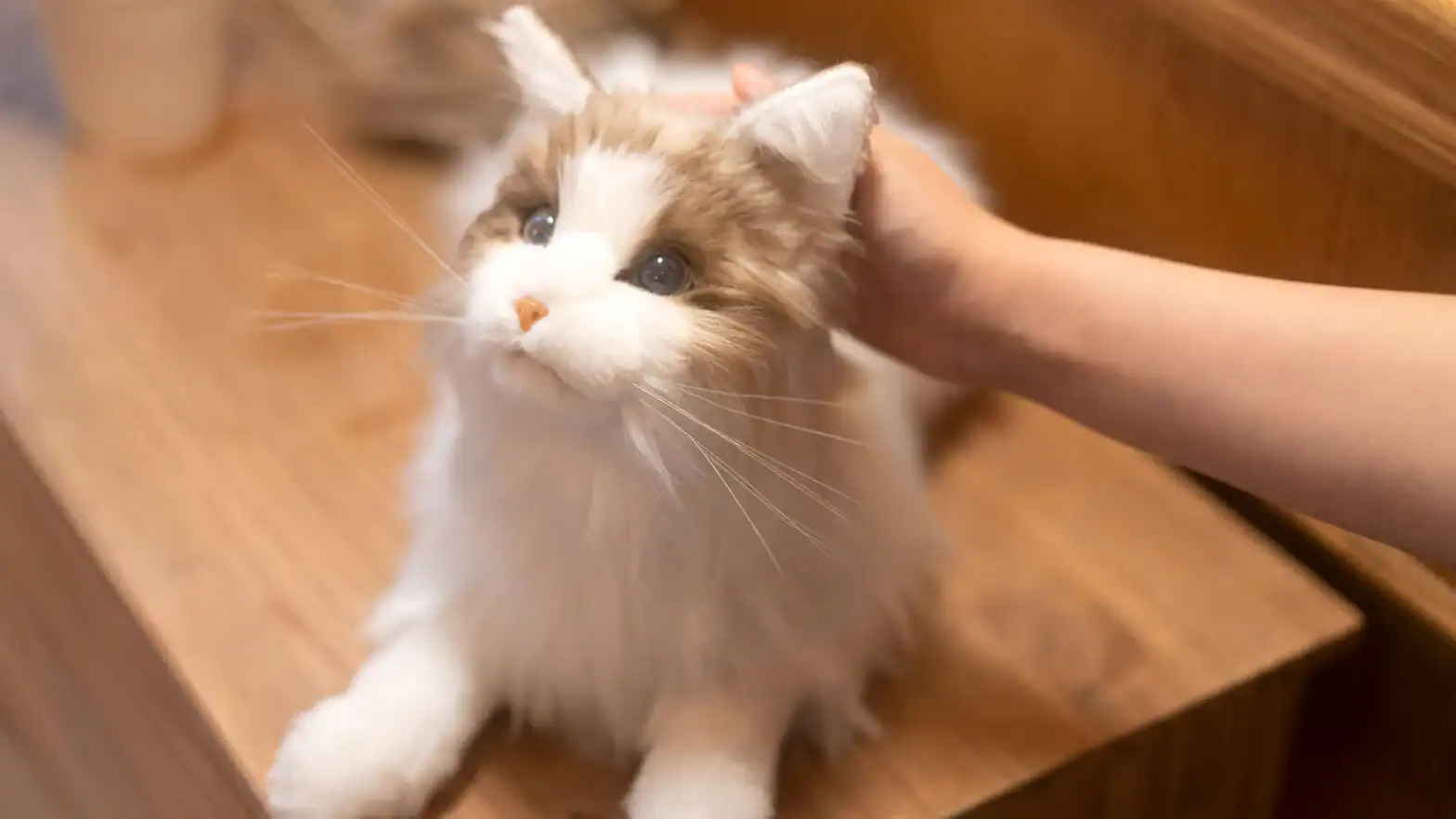
A robot cat only feels “good” if it fits the environment it’s used in. The same product can feel excellent in one context and completely underwhelming in another.
For Elderly Users and Dementia Care
In care environments, overstimulation is a real issue. Devices that are too reactive, too noisy, or too unpredictable can create confusion rather than comfort. What works here is controlled interaction.
A well-designed therapy robot cat provides gentle, consistent feedback. When touched, it responds. When left alone, it settles into quiet, idle behavior. There are no sudden movements or loud sounds that could startle the user. The simplicity is intentional. The goal is not to entertain. It’s to create a stable, reassuring presence. Over time, this consistency allows the robot cat to become part of a routine. Users learn what to expect, and that predictability becomes a source of comfort.
For Children
Children engage differently. They respond to stimulation, variation, and unpredictability. A robot cat that behaves too calmly will lose their attention quickly. What works better is dynamic interaction, movement that changes direction, reacts to sound, or initiates activity on its own.
Durability also becomes a practical factor here. Devices will be handled, dropped, and used repeatedly. Build quality matters as much as interaction design. The key difference is that children don’t need realism. They need engagement loops that keep resetting curiosity.
For Pet Owners
When robot cats are used around real pets, the design priorities shift completely. Real cats are not looking for companionship from a device. They’re responding to stimuli. Movement patterns that resemble prey behavior are far more effective than lifelike appearance. This means:
- Sudden directional changes
- Short bursts of movement followed by pauses
- Low-to-ground motion that mimics small animals
A realistic-looking robot that moves predictably will be ignored. A simple device with erratic movement will get far more engagement. This is one of the clearest examples of why features don’t matter, behavior design does.
The Future of Robot Cats
The next wave of robot cats is not about adding more features. It’s about reducing artificiality. Developers are focusing on making interactions feel less scripted. This involves improving three areas simultaneously: sensor accuracy, movement fluidity, and behavioral variation. As these improve together, the interaction starts to feel less like triggering a response and more like engaging with a presence.
AI will play a role, but not in the way it’s often marketed. The real value will come from subtle adaptation: slight changes in behavior based on how the user interacts over time. Integration with smart environments is another likely direction. A robot cat could respond differently depending on the time of day, ambient noise, or user activity. This adds context to interaction, which is currently missing in most models.
The long-term trajectory is clear: robot cats will become less reactive and more context-aware. The shift is from devices that respond to input toward systems that anticipate interaction. That’s the point where robot cats move from being interesting products to genuinely useful companions.
Final Thoughts
Robot cats fill a unique space between technology and companionship. Their value comes from solving specific problems: loneliness, inactivity, accessibility, not from trying to replace real animals entirely.
The key to choosing the right one is clarity. When you understand what you need, comfort, interaction, or entertainment, you can narrow the category quickly and avoid being distracted by unnecessary features.
From therapy tools to smart interactive pets, robot cats are no longer niche. They are becoming a practical, widely used solution for modern lifestyles.
Frequently Asked Questions About Robot Cats
Are robot cats effective for loneliness?
They can be, particularly for individuals who benefit from tactile interaction. The effectiveness depends on how well the device simulates responsiveness and presence.
How long do robot cats stay engaging?
This depends on behavior variation. Models with limited responses become predictable quickly. Those with more variation maintain engagement longer.
Do robot cats require maintenance?
Maintenance is minimal, primarily battery management and occasional cleaning. In shared environments, hygiene protocols are important.
Are expensive robot cats worth it?
Only if the added cost improves interaction quality. Features alone do not guarantee a better experience.