
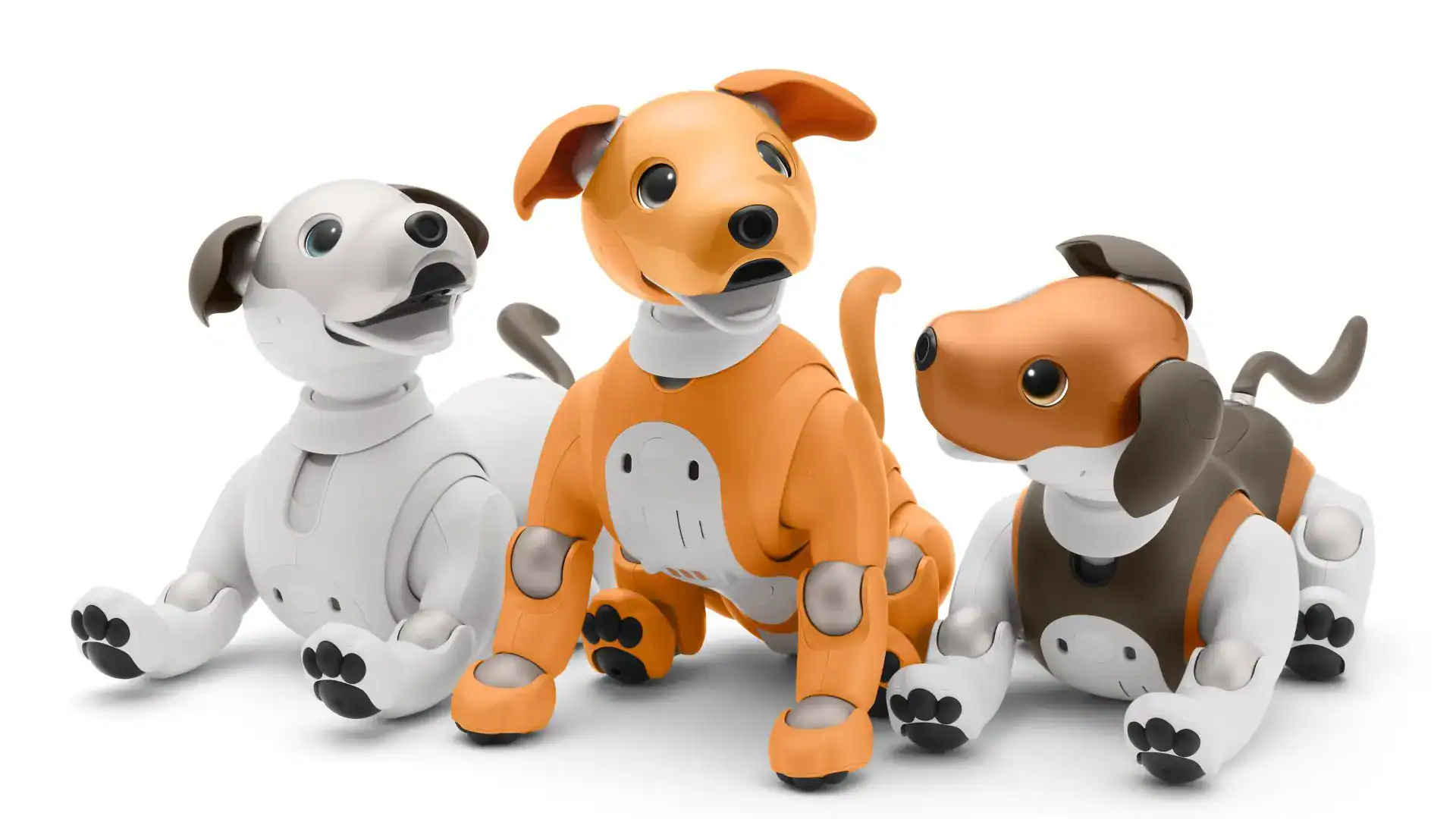
Robot dogs have evolved from simple novelty toys into intelligent, interactive companions that fit seamlessly into modern life. Today’s models can respond to touch, recognize voices, adapt their behavior, and even support emotional well-being. Whether you’re exploring them for companionship, education, or pure curiosity, robot dogs now offer far more than surface-level entertainment.
This guide breaks down everything you need to know: what robot dogs are, how they work, why people buy them, and how to choose one that actually delivers a meaningful experience over time.
What Is a Robot Dog?
A robot dog is a robotic system designed to replicate the behavior, interaction, or appearance of a real dog. Some are built for entertainment, while others are designed for learning, companionship, or even professional applications. At its core, a robot dog combines:
- Sensors to detect touch, sound, and movement
- Motors and actuators to create motion
- Software systems that control how it responds
The difference between a basic toy and a well-designed robot dog comes down to interaction. A strong robot dog doesn’t just perform actions. It reacts in ways that feel responsive, intentional, and consistent.
How Robot Dogs Work
Robot dogs operate through a continuous loop of sensing, processing, and responding, all happening in real time. When you interact with the robot, whether by touching it, speaking to it, or moving nearby, its sensors pick up those signals and send them to an onboard system that interprets what’s happening. That system then decides how the robot should respond and sends instructions to its motors and components to carry out the action, whether that’s moving, making a sound, or changing behavior.
What separates basic models from more advanced ones is how intelligently this process is handled. Simpler robot dogs rely on fixed, pre-programmed responses, which can feel repetitive over time. More capable models use layered decision systems that introduce variation, allowing the robot to respond differently depending on context, timing, or previous interactions. This creates a more natural interaction flow, where responses feel less scripted and more dynamic.
Movement plays an equally important role. Motors and actuators control the robot’s legs, head, and other parts, but the quality of that movement depends on how precisely those components are coordinated. Smooth, well-timed motion makes the robot feel more lifelike, while stiff or delayed movement can immediately break immersion, even if the robot has advanced features on paper.
Some robot dogs also incorporate adaptive systems or receive software updates that refine their behavior over time. This doesn’t mean they “learn” in a human sense, but it does allow for more variation and improvement in how they respond, helping maintain engagement beyond the initial novelty. Ultimately, how well a robot dog works comes down to how seamlessly these systems come together, because the experience is defined not by individual features, but by how consistently and naturally the robot reacts to you.
Benefits of Robot Dogs
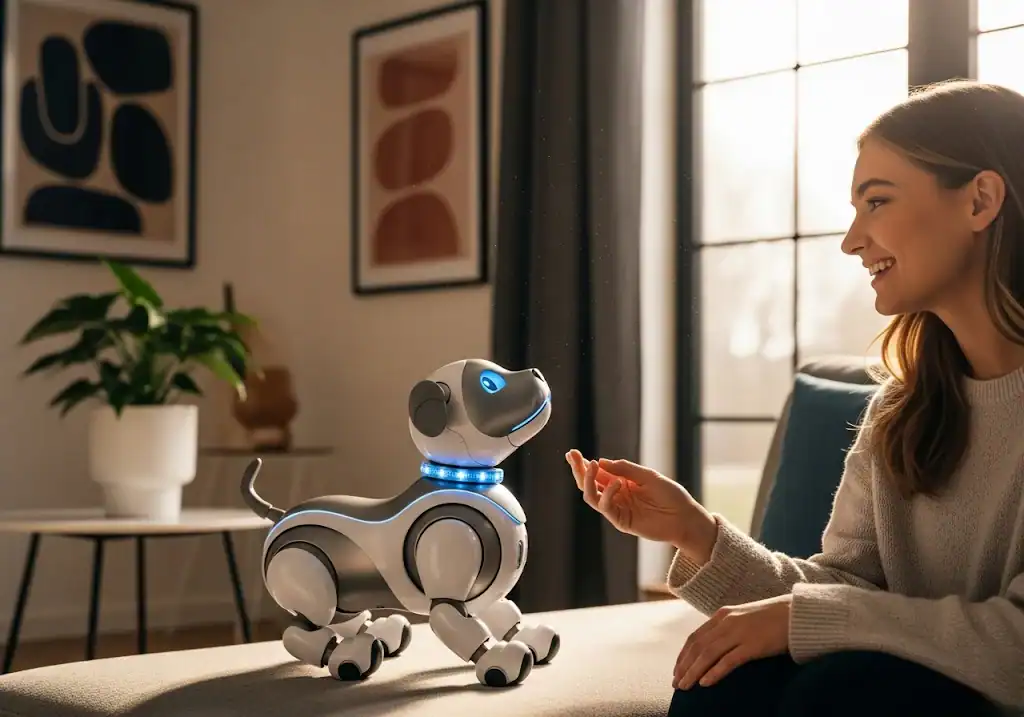
Robot dogs provide value in ways that go far beyond simple entertainment. Their appeal comes from how they balance interaction, accessibility, and control, delivering experiences that are difficult to replicate with either traditional toys or live pets. When designed well, they fit into daily life without adding complexity, while still offering meaningful engagement.
Consistent Companionship Without Uncertainty
One of the biggest advantages of robot dogs is consistency. Unlike real animals, their behavior is controlled and predictable, which makes interaction easier to manage and more reliable over time. This matters more than it sounds.
With live pets, mood, energy levels, and environment can all affect how they respond. Robot dogs remove that variability. When you interact with them, you know what to expect, and that reliability makes it easier to build a routine around them. In practice, this means users are more likely to engage regularly. There’s no hesitation about timing, no concern about whether the pet is resting or reactive. The interaction is always available, which makes the experience feel stable rather than situational.
Lower Commitment Without Losing Interaction
Traditional pet ownership comes with ongoing responsibilities that don’t scale down easily. Feeding schedules, exercise, grooming, and healthcare all require consistent attention. For many people, this is the primary barrier, not lack of interest.
Robot dogs remove those obligations while preserving the core element people are looking for: interaction. You can engage when you want, step away when needed, and return without disruption. This flexibility changes how people use them. Instead of planning around the pet, the pet adapts to the user. That shift makes robot dogs particularly appealing for individuals with unpredictable schedules or limited availability.
Effective in Structured and Therapeutic Environments
Robot dogs are increasingly used in environments where controlled interaction is essential. In therapy settings, especially with elderly users or individuals with cognitive conditions, predictability is more valuable than complexity. Because robot dogs respond consistently, they create a stable interaction pattern that users can learn and rely on. This can help reduce anxiety, encourage engagement, and provide a sense of familiarity over time.
They also remove risks associated with live animals, such as overstimulation or unpredictable reactions. This makes them easier to integrate into care settings where safety and consistency are priorities.
Accessible Introduction to Technology
Robot dogs make advanced technology feel approachable. Instead of interacting with abstract systems, users engage with something tangible that responds in real time. For children in particular, this creates a natural entry point into understanding how systems work. Actions lead to visible outcomes, which reinforce cause-and-effect thinking without requiring technical knowledge.
In models that support programming, this extends further. Users can modify behaviors, test outcomes, and see how small changes affect the system. The learning process feels intuitive because it’s tied directly to interaction.
Designed for Flexible, Modern Lifestyles
Modern living environments don’t always accommodate traditional pets. Space limitations, rental restrictions, and lifestyle demands can make pet ownership impractical, even for people who want it. Robot dogs are built with these constraints in mind. They don’t require outdoor space, don’t create long-term obligations, and don’t impose additional structure on daily routines. This makes them easier to integrate into a wide range of living situations. Whether in a small apartment or a shared household, they provide interaction without requiring compromise.
Types of Robot Dogs
Robot dogs vary widely in purpose, design, and capability. Grouping them into categories isn’t just about labeling. It helps you understand what each type is actually optimized for. Most disappointment comes from buying a robot dog designed for one purpose and expecting it to perform like another. The differences aren’t subtle; they affect how the robot behaves, how long it stays engaging, and how much value you get from it over time.
Toy Robot Dogs
Toy robot dogs are built for immediate, low-effort enjoyment. They typically come with pre-set actions like walking, barking, sitting, or responding to button inputs or simple remote controls. What defines this category isn’t just simplicity. It’s limited interaction depth. These models operate on fixed sequences, meaning once you’ve seen their full range of actions, there’s little variation left to explore. This is why they often feel exciting at first but quickly become predictable.
That said, they serve a clear purpose. For younger children or casual use, they provide instant feedback and easy interaction without requiring setup or learning. The best robot dogs in this category focus on smooth execution of a small set of behaviors rather than trying to simulate complexity they can’t sustain.
Interactive Companion Robot Dogs
This is where robot dogs start to feel like actual companions rather than gadgets. These models are designed around interaction loops. They respond to touch, voice, movement, and sometimes environmental changes in ways that feel more varied and intentional. The key difference here is behavior design. Instead of triggering a single fixed response, these robots often select from multiple possible reactions depending on context. For example, repeated interaction might not always produce the same outcome, which helps maintain engagement over time.
What matters most in this category isn’t the number of features, but how well the system handles responsiveness and variation. A well-designed companion robot dog feels consistent but not repetitive. It reacts quickly, introduces subtle differences in behavior, and maintains a sense of continuity across interactions. This is the category most people should focus on if they’re looking for long-term use rather than short-term novelty.
Programmable and STEM Robot Dogs
Programmable robot dogs shift the experience from interaction to control and creation. Instead of simply responding, these robots allow users to define what they do through apps, block-based coding systems, or more advanced programming interfaces. What sets them apart is transparency. You’re not just seeing behavior. You’re building it. This makes them particularly valuable in educational settings, where the goal is to understand logic, sequencing, and cause-and-effect relationships at a deeper level.
In practice, this means:
- You can modify how the robot reacts to inputs
- You can create custom movement patterns or routines
- You can experiment and immediately see the results
These models may feel less “alive” out of the box compared to companion-focused robots, but they offer significantly more depth over time. The engagement comes from exploration and iteration rather than passive interaction.
Advanced and Industrial Robot Dogs
At the highest level, robot dogs are built not for companionship, but for real-world tasks. These machines prioritize mobility, stability, and autonomy over emotional interaction. A well-known example is Boston Dynamics Spot, which is used for inspection, data collection, and operations in environments that are difficult or unsafe for humans.
What defines this category is capability under real conditions:
- Navigating uneven or complex terrain
- Maintaining balance while carrying loads
- Operating semi-autonomously with minimal input
While these robot dogs aren’t intended for home use, they demonstrate what’s technically possible. Many of the improvements seen in consumer models, better movement, improved sensors, more stable control systems, are influenced by developments at this level.
What Makes a Robot Dog Good
Most people evaluate robot dogs by scanning feature lists: how many tricks it can do, whether it has voice control, or how advanced the app looks. But none of that determines whether the experience holds up after repeated use. What actually matters is how the robot behaves in real interaction, especially over time.
Responsiveness Is Everything
Responsiveness is the foundation of the entire experience. When you touch, speak, or move near a robot dog, the response needs to feel immediate and reliable. Even small delays or missed inputs create a disconnect that makes the interaction feel artificial.
In stronger models, responsiveness is tight enough that actions feel continuous rather than step-by-step. You don’t feel like you’re triggering a function. You feel like you’re engaging with something that is aware of your presence. This is what turns interaction into something that feels natural instead of mechanical.
Movement Quality Over Quantity
A long list of actions, sit, roll, bark, jump, means very little if those actions look stiff or poorly timed. Movement quality is what creates the illusion of life. Well-executed robot dogs focus on:
- Smooth transitions between actions
- Balanced pacing that doesn’t feel rushed or robotic
- Subtle variations in motion that prevent repetition
This is why simpler robots with refined movement often feel more convincing than feature-heavy models with awkward execution. The body language matters more than the number of tricks.
Behavior Variety Drives Longevity
Initial interaction is easy to get right. Long-term engagement is not. Lower-quality robot dogs rely on a small set of repeated responses. Once you’ve seen those patterns, interaction becomes predictable and loses its appeal. This is where many products fail. They don’t evolve beyond the first impression.
Stronger models introduce variation through layered behaviors. The same interaction might produce slightly different responses depending on timing, frequency, or context. This variation doesn’t need to be dramatic. It just needs to be enough to prevent the experience from feeling static.
Consistency Builds Trust
While variation keeps things interesting, consistency makes interaction usable. A robot dog should respond reliably to the same input in the same way when it matters. This is especially important in companion or therapeutic use. Predictable behavior creates familiarity, which encourages repeated interaction. When responses become inconsistent, users lose confidence in how the robot will behave, and engagement drops. A well-designed robot dog balances both consistent core responses with enough variation to avoid repetition.
Key Features That Matter
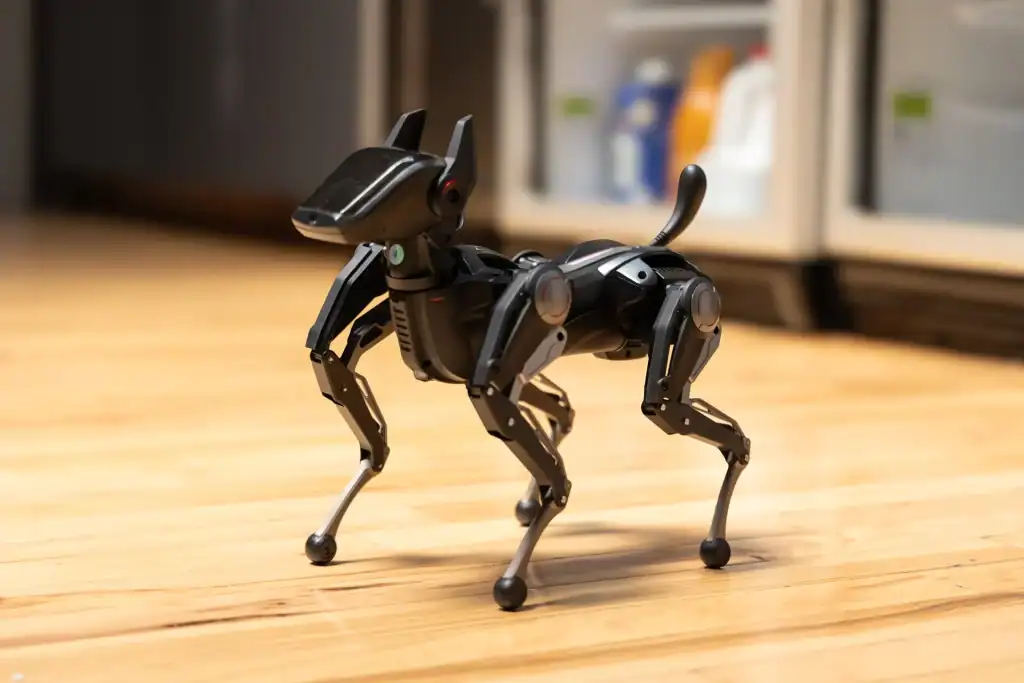
Instead of focusing on how many features a robot dog has, it’s more useful to understand how those features perform in real-world use. The difference between a good and a poor experience often comes down to execution.
Sensor Quality
Sensors are how the robot understands what you’re doing. If they’re inaccurate or inconsistent, everything else breaks down. High-quality sensors can distinguish between different types of input, such as a light tap versus a sustained touch, and respond accordingly. Lower-quality systems may miss inputs entirely or trigger the wrong response, which quickly becomes frustrating.
Voice Interaction
Many robot dogs advertise voice control, but the real question is how reliably it works. Voice interaction should feel effortless, not repetitive. If the system struggles to recognize commands or requires multiple attempts, users tend to stop using the feature altogether. Strong models process voice input quickly and respond in a way that feels integrated into the overall interaction, not separate from it.
Movement and Stability
Movement isn’t just about whether the robot can walk. It’s about how confidently and smoothly it moves. A stable robot dog maintains balance, turns naturally, and adjusts its motion without appearing forced. This becomes especially noticeable when interacting on different surfaces or during repeated actions. Poor stability makes the robot feel fragile or unfinished.
App Integration
Apps can add value by allowing customization, updates, and expanded control. However, they should enhance the experience, not become the primary way you interact with the robot. The best models work intuitively on their own, with the app serving as a way to refine or expand functionality rather than compensate for limitations.
Battery Performance
Battery life directly affects usability. A robot dog that needs frequent charging interrupts interaction and reduces how often people choose to use it. More importantly, charging downtime breaks continuity. If the robot is often unavailable, it stops feeling like a companion and starts feeling like a device that requires management.
Limitations to Be Aware Of
Robot dogs aren’t designed to replicate real dogs perfectly, and that’s not where their value comes from. They operate within defined systems, which means their behavior is ultimately structured, even when it feels dynamic.
They don’t form emotional bonds in the same way living animals do, and their responses are based on programmed logic rather than instinct. However, this structure is also what makes them reliable, predictable, and easier to integrate into controlled environments.
Understanding this distinction is important. When expectations are aligned with what robot dogs are designed to do: provide consistent, engaging interaction rather than organic unpredictability, the experience tends to be far more satisfying.
How to Choose the Right Robot Dog
Choosing a robot dog isn’t about finding the most advanced model. It’s about finding one that aligns with how you actually plan to use it.
For Casual Use and Entertainment
If the goal is occasional interaction or light entertainment, simpler models can be enough. In this case, ease of use and immediate responsiveness matter more than depth.
For Long-Term Interaction and Companionship
For ongoing use, responsiveness and behavior variation become critical. The robot needs to remain engaging beyond the first few interactions, which means prioritizing models that focus on interaction quality rather than feature count.
For Learning and Exploration
If the goal is education or skill-building, programmable robot dogs offer significantly more value. The ability to control and modify behavior creates a deeper level of engagement that extends over time.
For Realism and Immersion
If realism is important, movement quality and interaction flow should be the top priorities. A robot that moves naturally and responds smoothly will feel more convincing than one with more features but weaker execution.
Ultimately, the best choice is the one that fits your intended use, not the one with the longest list of capabilities.
The Future of Robot Dogs
Robot dogs are advancing quickly, but the direction of that progress is shifting. Early development focused on adding more features: more movements, more commands, more complexity. The current focus is on refining interaction so that it feels more natural, responsive, and consistent.
Advances in artificial intelligence are allowing robot dogs to handle context better, introducing more variation without losing reliability. Improvements in sensors and movement systems are making interactions smoother and more precise. At the same time, integration with other technologies, such as smart home systems, is expanding what these devices can do within everyday environments.
What’s changing isn’t just the capability of robot dogs, but their role. They’re moving away from being novelty devices and toward becoming tools for interaction, learning, and support. As that shift continues, the value of robot dogs will depend less on what they can do, and more on how naturally they fit into daily life.
Final Thoughts
Robot dogs sit at the intersection of technology and companionship. The best ones don’t just perform actions. They create experiences that feel responsive, consistent, and engaging over time. If you approach them with the right expectations and focus on how they actually interact, not just what features they list, you’re far more likely to find one that delivers real value.
Frequently Asked Questions About Robot Dogs
Are robot dogs worth it?
They can be, depending on what you’re looking for. If you value interaction, learning, or low-maintenance companionship, a well-designed robot dog can provide long-term value.
Do robot dogs require maintenance?
Maintenance is minimal compared to real pets. Most models require charging, occasional cleaning, and software updates.
Can robot dogs replace real pets?
No, but they don’t need to. They offer a different kind of experience that works in situations where real pets may not be practical.
Are robot dogs good for kids?
Yes, especially models designed for interaction or learning. They can encourage curiosity, responsibility, and engagement with technology.