
If you’ve seen viral videos of a robot reacting like a human, raising its eyebrows, smirking, or making eye contact, there’s a good chance you’ve already seen Ameca.
This isn’t a toy, and it’s not even a consumer robot. It’s a research-grade humanoid robot designed to explore how machines and humans interact. What makes it fascinating is how natural those interactions feel. The expressions, timing, and movement create a level of realism that most robots don’t even attempt.
About Ameca by Engineered Arts

| Manufacturer | Engineered Arts |
| Model Name | Ameca |
| Color | Grey/neutral (silicone face, metallic body) |
| Dimensions | Human-sized upper-body humanoid |
| Weight Specifications | Varies by configuration |
| Batteries | Powered via external power system (not consumer battery-based) |
Ameca is a humanoid robot developed by Engineered Arts, a company focused on building expressive, human-like machines for research, exhibitions, and public interaction. It was first revealed in 2021 and quickly gained attention for its lifelike facial expressions and ability to interact with people in real time.
The robot is designed as a platform rather than a finished product. That means it can be integrated with AI systems, including conversational models, and used in different environments, from museums to research labs.
Ameca uses cameras in its eyes, microphones, and facial recognition systems to understand and respond to people. Its movements are powered by a complex system of motors that control the face, arms, and upper body.
Ameca by Engineered Arts Benefits
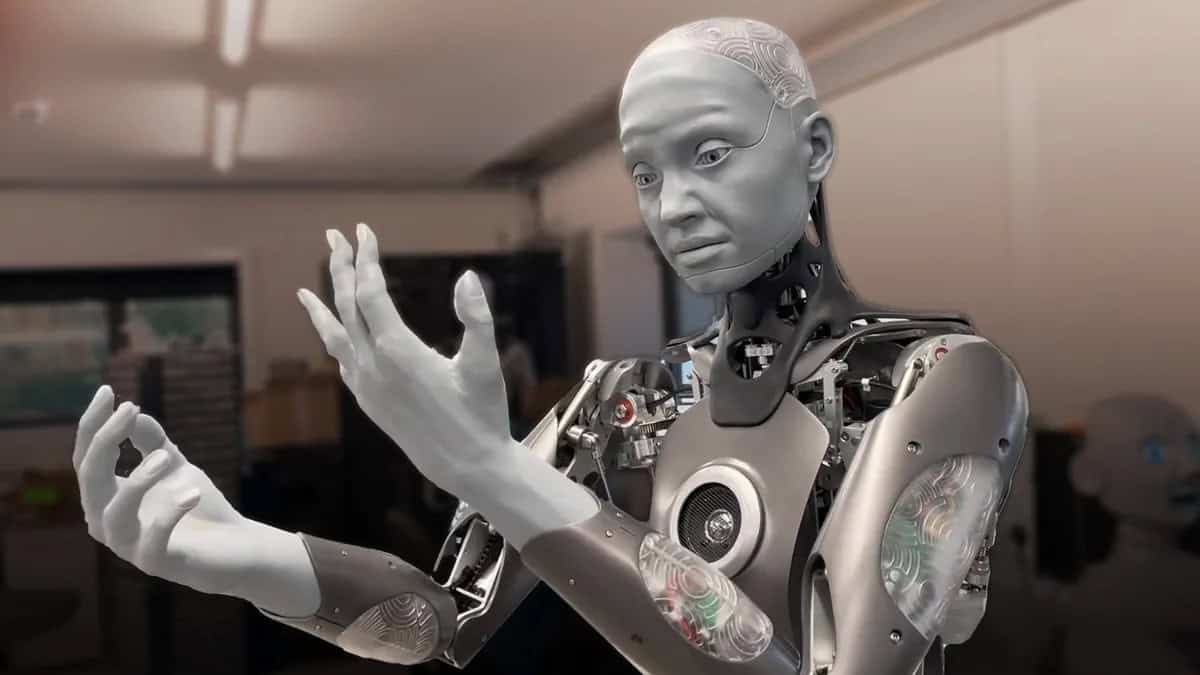
Facial Expressions That Actually Feel Human
This is where Ameca stands apart. The face isn’t just animated. It reacts with subtlety. Small eyebrow movements, eye tracking, and micro-expressions make interactions feel surprisingly natural. That level of realism changes how people respond. Conversations feel less like talking to a machine and more like interacting with a character.
Built for Real Conversations
Ameca can be integrated with AI systems to hold conversations, answer questions, and respond in real time. The experience depends on the software running behind it, but the physical delivery, eye contact, pauses, gestures, adds a layer that text or voice assistants don’t have.
Designed as a Platform, Not a Fixed Product
Most robots are built to do one thing. Ameca is designed to evolve. Researchers and companies can plug in different AI systems, update behaviors, and adapt it for new use cases. That flexibility is why it’s being used in labs, exhibitions, and tech showcases.
Strong Presence in Real-World Environments
Ameca has been used in museums, tech events, and public installations where it interacts directly with visitors. Its ability to hold attention is a big part of its value. People don’t just glance at it. They stop, watch, and engage.
A Clear Glimpse Into Future Human-Robot Interaction
This robot shows where things are heading. The combination of AI conversation and physical expression creates a more complete interaction than screen-based systems. It highlights both the potential and the challenges of integrating robots into everyday environments.
Pros and Cons of Ameca by Engineered Arts
| Pros | Cons |
|---|---|
| ✔️ Realistic human-like robot appearance ✔️ Exceptional human-to-robot interaction ✔️ Advanced facial expressions | ✖️ Limited mobility and industrial functions |
What People Are Saying About It
Ameca has sparked strong reactions online and at live demonstrations. Many people are impressed by how expressive it is, often describing it as one of the most lifelike robots they’ve seen. At the same time, reactions are mixed. Some find it fascinating, while others describe it as slightly unsettling due to how close it gets to human behavior.
From a technical perspective, experts see it as a major step forward in human-robot interaction. The focus on expression rather than full mobility reflects where the industry is currently placing its priorities.
Ameca is a new humanoid robot that doesn’t have realistic hair and skin like Mesmer, but can instead show more human-like, natural-looking expressions than others we’ve seen.
Steve Dent – Engadget

Ameca by Engineered Arts
Ameca stands out because it focuses on expression and interaction rather than movement or utility.
The realism of its facial expressions and the way it communicates create an experience that feels closer to human interaction than most robots available today. It’s not designed for everyday tasks, and it doesn’t aim to replace practical robots.
Instead, it explores how humans and machines connect, and it does that in a way that’s hard to ignore.