
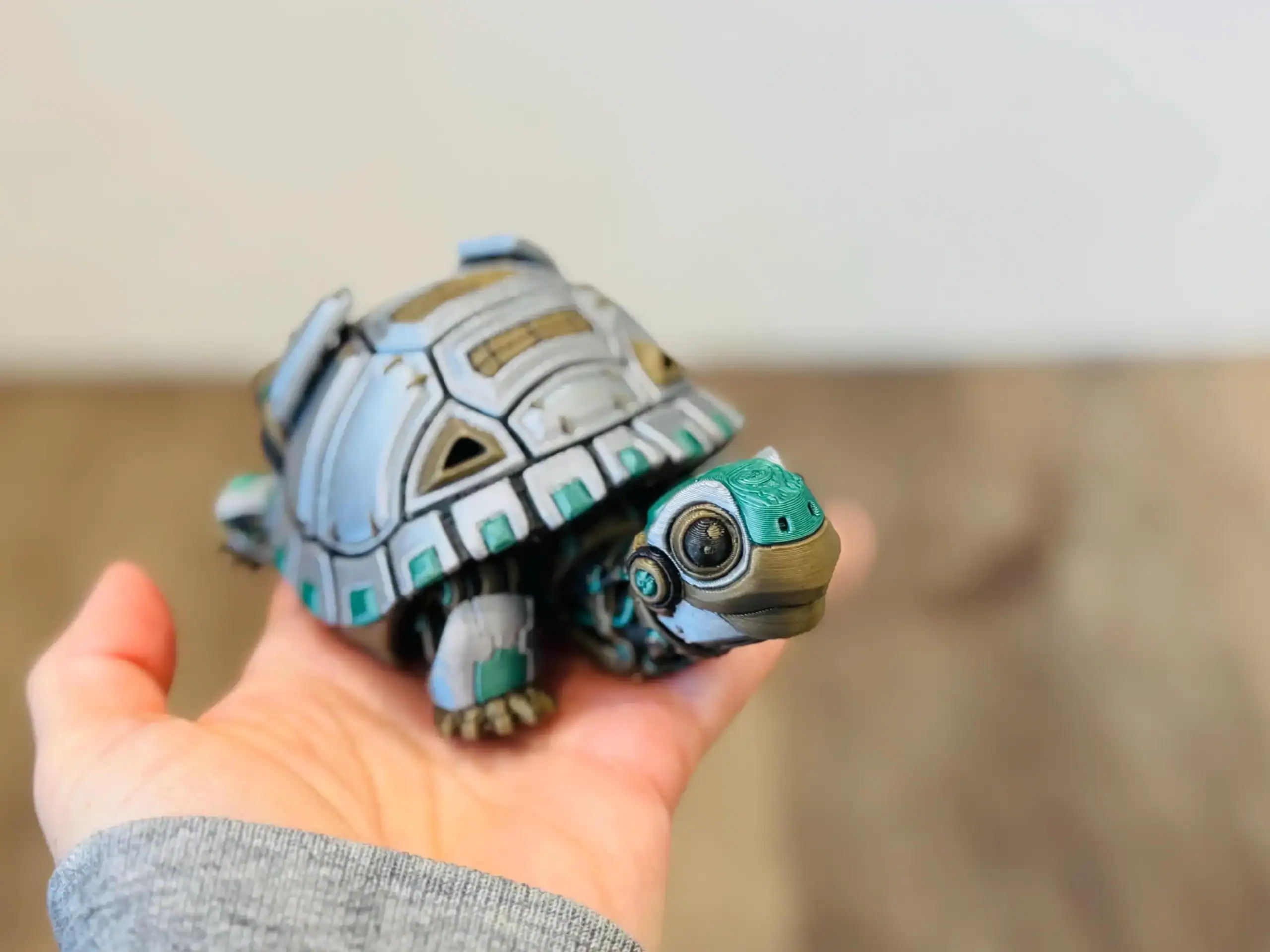
Robot turtles sit at an interesting intersection between robot fish and ground-based robotic pets. Some are designed to swim like real sea turtles, others crawl or move on surfaces, and a separate category focuses on education and programming.
What makes robot turtles unique is their movement style and behavioral pacing. Compared to faster or more reactive robots, turtles are naturally slower, more deliberate, and more controlled. When translated into robotics, this creates a very different experience, one that feels steady, predictable, and often more relaxing.
This guide covers everything you need to know, from how robot turtles work to what actually makes a good one, along with types, benefits, and how to choose the right model.
What Is a Robot Turtle?
A robot turtle is a robotic system inspired by real turtles, designed to replicate aspects of their movement, shape, or behavior. Depending on the type, this can include swimming in water, crawling on surfaces, or acting as a programmable educational robot. Robot turtles fall into two broad concepts:
- Biomimetic turtles that imitate real turtle movement (swimming or crawling)
- Functional turtle robots used in education or robotics research
Historically, “turtle robots” have also played a major role in education. Early turtle robots were used to teach programming concepts, where users controlled movement and behavior, an approach that still influences modern learning robots today.
How Robot Turtles Work
Robot turtles operate through a combination of sensors, control systems, and movement mechanisms adapted to either water or land.
Swimming models typically use flipper-like propulsion systems instead of simple tail movement. These flippers push against water in a controlled rhythm, allowing the robot to glide forward and steer gradually. More advanced systems mimic the coordinated motion of real sea turtles, adjusting speed and direction smoothly rather than abruptly.
Land-based models rely on wheels or leg mechanisms, often combined with sensors that help them avoid obstacles or respond to their environment. Educational versions may include programmable controls, allowing users to define how the robot moves and reacts.
At a system level, the process follows a familiar loop: sensors detect input (movement, obstacles, or commands), the onboard processor determines a response, and motors or actuators execute that response. The difference lies in how movement is expressed. Robot turtles emphasize steady, controlled motion rather than speed or agility.
Benefits of Robot Turtles
Robot turtles offer a mix of calming presence, educational value, and accessible interaction, depending on the type.
Calm, Predictable Movement
Compared to faster robotic pets, robot turtles move slowly and deliberately. This creates a more relaxed interaction style, especially in aquatic models where movement feels smooth and continuous. This makes them suitable for environments where overstimulation is a concern, such as quiet living spaces or work areas.
Strong Educational Foundation
Robot turtles have a long history in education, particularly in programming and robotics. Early models helped users understand logic, sequencing, and control by translating commands into movement. Modern versions continue this approach, allowing users, especially children, to experiment with how input creates output in a physical system.
Accessible and Easy to Use
Many robot turtles are designed for simplicity. Whether placed in water or used on a surface, they typically require minimal setup and provide immediate feedback. This makes them approachable for beginners and casual users.
Visual and Interactive Appeal
Swimming robot turtles, in particular, offer a strong visual experience. Their flipper-based movement stands out compared to standard robotic fish, creating a more recognizable and engaging motion pattern.
Types of Robot Turtles
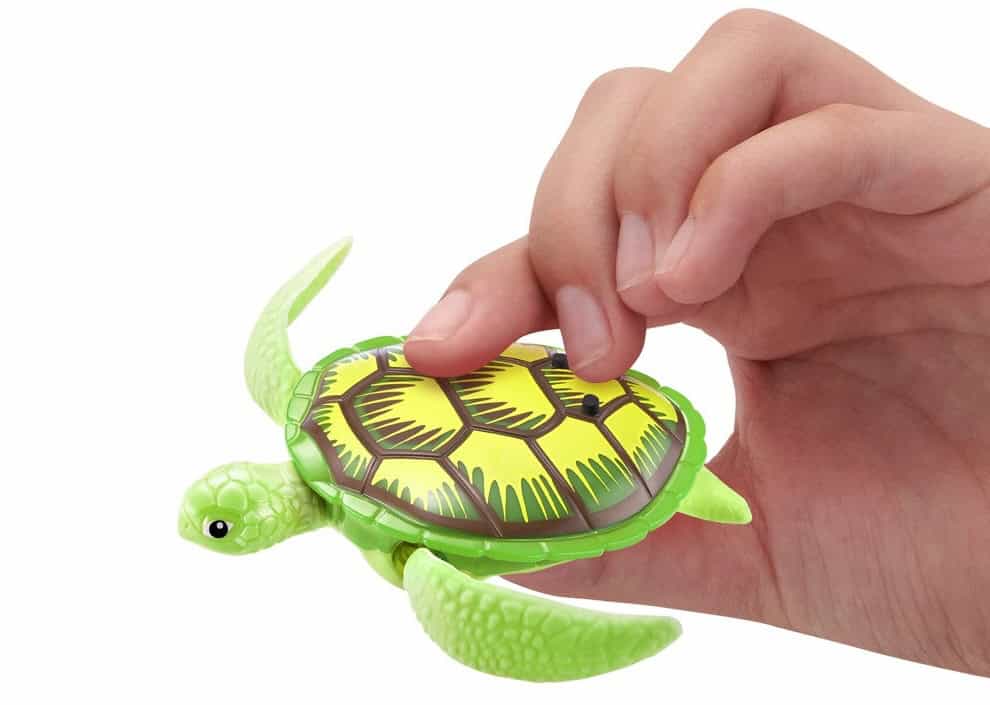
Robot turtles vary widely depending on whether they’re built for play, learning, or technical applications. Understanding these differences helps you choose the right type for your needs.
Toy Robot Turtles
These are the most common consumer models. Many are water-activated and begin swimming once placed in water, using basic flipper or tail propulsion. What defines them is immediacy. They’re easy to use and visually engaging, but typically rely on fixed movement patterns. Over time, these patterns can become predictable, especially in smaller environments.
The better models introduce slight randomness in direction or timing, which helps maintain interest longer.
Interactive Robot Turtles
Interactive models go beyond simple movement by responding to touch, motion, or environmental triggers. For example, they may:
- Change direction when encountering obstacles
- Adjust movement based on interaction
- Combine motion with sound or light feedback
Instead of repeating a fixed loop, the robot reacts in ways that feel more connected to its environment, which improves engagement.
Programmable Turtle Robots
This category builds on the legacy of turtle robots in education. These models allow users to control movement through commands, apps, or coding interfaces. They’re designed to teach:
- Sequencing and logic
- Cause-and-effect relationships
- Basic robotics principles
The value comes from interaction at a deeper level. You’re not just watching the robot move, you’re defining how it moves.
Research and Biomimetic Turtle Robots
At the highest level, robot turtles are used in research, particularly for underwater exploration and environmental monitoring. Some are designed to navigate delicate ecosystems like coral reefs using soft, flipper-based movement.
These systems focus on efficiency, adaptability, and minimal environmental impact. While not consumer products, they influence how more advanced robot turtles are designed.
What Makes a Robot Turtle Good
Robot turtles are judged almost entirely on how convincing their movement feels over time. Because they move slowly and deliberately, there’s nowhere to hide poor execution. Every pause, every turn, and every change in speed is visible. A good robot turtle doesn’t just move. It maintains a sense of flow that holds up under continuous observation.
Smooth, Controlled Movement That Feels Continuous
Movement should feel like a single, uninterrupted motion rather than a sequence of repeated actions. In water, this means propulsion needs to carry momentum naturally, without visible resets between cycles. Lower-quality models often reveal a pattern where the turtle moves, pauses slightly, then resumes. This “start-stop” behavior immediately breaks immersion.
Stronger designs maintain a steady rhythm. The flippers or propulsion system generate forward motion that feels sustained, not restarted. Even when the turtle slows down, it should feel like a gradual loss of momentum rather than a mechanical pause.
Natural Steering That Follows Momentum
Turning is one of the clearest indicators of quality. Real turtles don’t pivot sharply. They arc into direction changes, using their body and flippers to guide movement. A well-designed robot turtle mirrors this by introducing curved transitions. It doesn’t suddenly switch direction; it leans into a turn and follows through. This creates a sense of weight and presence in the water.
When turning is too sharp or timed at fixed intervals, it becomes predictable. Over time, users begin to anticipate every movement, which reduces the sense of realism.
Stability That Reinforces Control
Whether in water or on land, stability defines how “complete” the system feels. In aquatic models, this means maintaining a consistent depth and orientation without excessive wobbling or drifting. On land, it means controlled, balanced movement without tipping or uneven motion.
Instability doesn’t just look unrealistic. It makes the robot feel unreliable. A stable robot turtle, on the other hand, reinforces the idea that all parts of the system are working together cohesively.
Consistency That Holds Up Over Time
Robot turtles are often observed for longer periods rather than actively controlled. That makes consistency critical. Performance should remain steady across time:
- Movement speed should not degrade noticeably
- Direction changes should remain controlled
- Behavior should not become erratic as battery levels drop
If the robot starts strong but becomes inconsistent, the illusion fades quickly. A good robot turtle maintains its quality of movement from the first minute to the last.
Key Features That Matter
Robot turtles don’t need a wide range of features, but the ones they rely on must be executed with precision. These directly affect how natural and reliable the robot feels in real use.
Propulsion System Design
For aquatic robot turtles, the propulsion system is everything. Flippers should move in a way that creates smooth, wave-like motion rather than rigid, repetitive strokes. The best robot turtles generate forward movement that feels balanced, allowing the turtle to glide rather than push itself forward in visible increments. Poor propulsion systems create uneven motion, where each stroke is noticeable and breaks the sense of fluidity.
Waterproofing and Structural Integrity
Water exposure puts constant stress on the robot. High-quality models are designed with tightly sealed compartments and materials that resist long-term wear. This isn’t just about preventing failure. It’s about maintaining consistent performance. Even minor water ingress can affect motors or sensors, leading to uneven movement or reduced responsiveness over time.
Sensor Integration That Enhances Movement
Sensors are not always the focus in robot turtles, but when used well, they improve interaction significantly. Basic obstacle detection or environmental response allows the turtle to adjust its path instead of following a fixed loop. This makes movement feel more adaptive and less predictable, especially in larger environments. Without sensors, behavior tends to repeat in obvious patterns, which reduces long-term engagement.
Battery Performance That Supports Continuous Use
Because robot turtles are often used passively, battery life affects how natural the experience feels. A model that runs for longer periods without interruption maintains a continuous presence. Frequent stops for charging break that continuity and make the robot feel more like a device than part of the environment.
Performance should also remain stable as the battery drains. If movement becomes weaker or inconsistent, it becomes noticeable quickly due to the slow pacing of the robot.
Structural Durability for Repeated Use
Robot turtles are often placed in water, handled, or repositioned. Build quality needs to support this without affecting performance. A durable structure ensures:
- Consistent movement mechanics over time
- Reliable sensor function
- Resistance to wear from repeated use
Weaker builds may still function initially but tend to degrade, especially in aquatic environments where exposure is constant.
Limitations to Be Aware Of
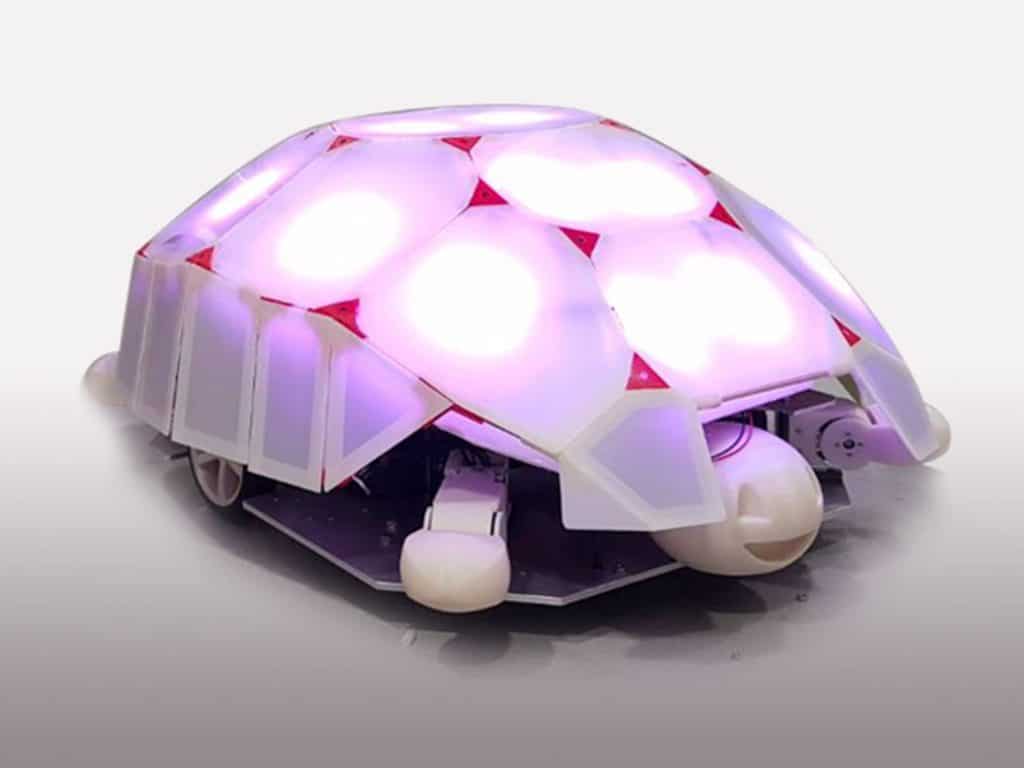
Robot turtles are not designed for high-speed interaction or complex behavior. Their slower movement style means they rely heavily on execution quality. If movement is poor, it becomes noticeable quickly. They can also feel repetitive if behavior variation is limited, particularly in smaller environments where movement patterns become easier to recognize.
These limitations are tied to their design. Robot turtles prioritize steady, controlled interaction rather than dynamic or high-energy engagement.
How to Choose the Right Robot Turtle
Choosing a robot turtle is less about comparing specs and more about understanding how it will function in your environment over time.
For Visual and Aquatic Use
If your goal is to create a calming, aquarium-like experience, movement quality should be your top priority. Focus on models with smooth propulsion and natural turning behavior. Subtlety matters more than features. What you’re really choosing is how convincing the motion feels during extended observation.
For Learning and Educational Use
If you’re using the robot turtle as a learning tool, programmable models offer more depth. The ability to control movement and behavior allows users to explore how systems respond to input, making the experience more interactive and informative over time.
For Casual Play
For everyday use, balance is key. The robot should be responsive enough to feel interactive, but durable enough to handle repeated handling or placement. Ease of use matters here. Quick setup and reliable operation make a bigger difference than advanced functionality.
For Long-Term Use
Long-term satisfaction comes from consistency. Look for models that maintain stable movement, reliable performance, and solid build quality over time. Subtle variation in behavior can help maintain interest, but it should never come at the cost of stability.
In the end, the best robot turtle isn’t the most advanced. It’s the one that continues to feel natural and reliable every time you use it.
The Future of Robot Turtles
Robot turtles are evolving through advances in soft robotics, AI, and biomimetic design. Researchers are developing systems that move more efficiently in water and adapt to complex environments. Future models are likely to feature:
- More realistic flipper-based locomotion
- Improved environmental sensing
- Greater autonomy in navigation
As these improvements reach consumer-level products, robot turtles will become more lifelike and capable while maintaining their core strength, controlled, natural movement.
Final Thoughts
Robot turtles offer a different kind of experience, one built around pace, control, and movement quality. They don’t rely on speed or complexity. They rely on consistency. And when that consistency is done well, it creates an experience that feels natural, calming, and surprisingly engaging over time.
Frequently Asked Questions About Robot Turtles
Are robot turtles worth it?
They can be, especially if you value smooth, calming movement or educational interaction. Their appeal lies in how they move, not how many features they have.
Do robot turtles require maintenance?
Minimal maintenance is needed, mainly charging and occasional cleaning, especially for aquatic models.
Can robot turtles be used in real aquariums?
Yes, many are designed for water use, but they don’t replace real aquatic ecosystems. They are best used for visual or interactive purposes rather than biological environments.