Robots Outpace Human Runners in Beijing Half Marathon as China Pushes AI Forward
Humanoid robots stole the spotlight at a half-marathon in Beijing after several machine runners outperformed human competitors in a dramatic display of how quickly robotics technology is evolving.
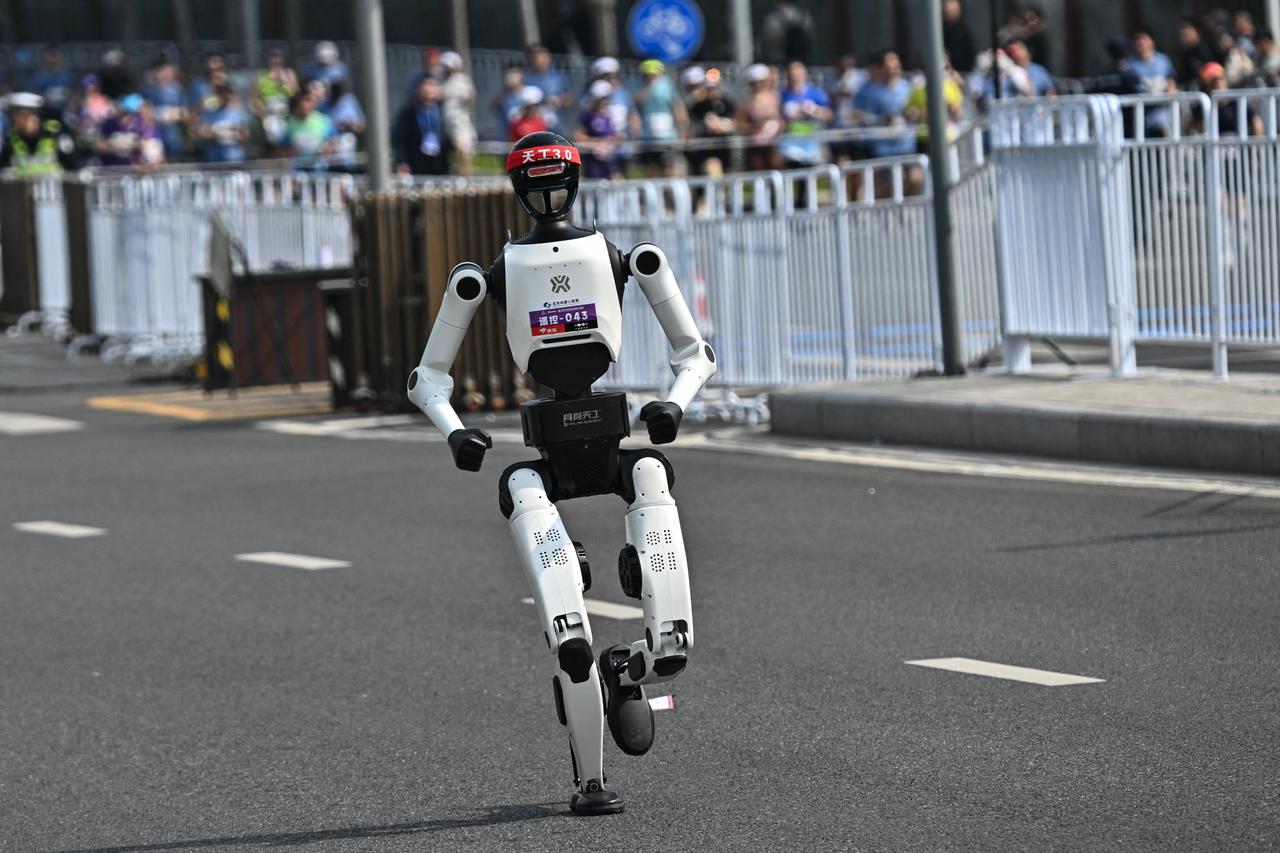
The event, held in Beijing’s E-Town technology district, featured hundreds of humanoid robots running alongside more than 12,000 human participants on a separate parallel course designed for safety. What made this year’s race particularly notable was how far the technology had advanced compared to the previous competition held in 2025.
Last year’s race exposed major limitations in humanoid robotics. Many machines struggled to remain upright, failed to leave the starting line cleanly, or were unable to complete the full 21-kilometer course. In contrast, this year’s robots demonstrated smoother movement, improved endurance, and far more stable navigation.
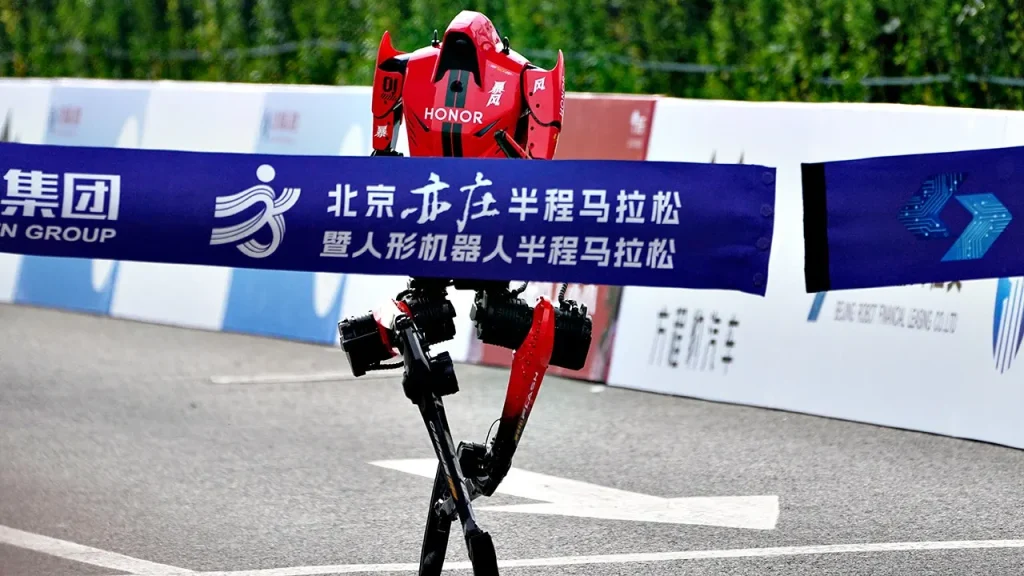
The standout performer was a robot named “Lightning,” developed by Chinese tech company Honor. The machine completed the half-marathon in just over 50 minutes, reportedly surpassing the fastest human finisher and even exceeding the current human half-marathon world record pace. Several other robots from the same company also finished near the top of the standings.
A major difference this year was the increase in autonomous operation. Nearly half of the participating robots reportedly navigated the course without direct human control, relying instead on onboard systems and AI-driven movement coordination. Engineers accompanying the machines still monitored performance and intervened when needed, but the level of independence shown during the race marked a substantial leap from earlier demonstrations.
The robots also appeared significantly more athletic than earlier humanoid models. Some featured advanced cooling systems adapted from smartphone technology, while others used redesigned leg structures intended to mimic efficient human running mechanics. Spectators watching from the sidelines described the machines as surprisingly fluid and natural in motion compared to the stiff movements typically associated with humanoid robots.
Not every robot performed flawlessly. Some machines reportedly stumbled near the start, collided with barriers, or required assistance from nearby technicians. Even so, the overall improvement from the previous year impressed both engineers and onlookers, many of whom viewed the race as a glimpse into how quickly robotics development is accelerating in China.
The marathon forms part of China’s broader push to establish itself as a leader in artificial intelligence and robotics. Government-backed initiatives and major technology firms are investing heavily in humanoid systems, with the long-term goal of deploying robots in manufacturing, logistics, hazardous environments, and eventually consumer-facing roles.
While some experts caution that athletic demonstrations don’t necessarily translate into real-world industrial usefulness, the race still highlighted how rapidly robotic mobility and balance systems are improving. Just a few years ago, many humanoid robots struggled with basic walking stability. Now, some are completing long-distance endurance races at speeds capable of challenging elite human runners.