Haptic Feedback vs. Other Sensory Interactions in Robot Pets: A Comparison
Table of Contents
Robot pets have evolved far beyond simple toys that bark, meow, or move across the floor. Modern robotic companions combine artificial intelligence, sophisticated sensors, responsive motors, and multiple forms of sensory feedback to create interactions that feel increasingly natural.
Instead of responding with a single action, many robot pets now engage users through touch, sound, movement, facial expressions, lights, and adaptive behaviors that change over time.
Among these technologies, haptic feedback has become one of the most influential. By recreating the sensation of physical interaction, haptics bridges the gap between digital commands and emotional experiences. Still, touch is only one piece of the puzzle. Sound, visual communication, and movement all contribute to how convincing and engaging a robotic pet feels.
Understanding how these sensory interactions work together reveals why some robot pets feel remarkably lifelike while others remain clearly mechanical.
What Is Haptic Feedback in Robot Pets?
Haptic feedback refers to technology that recreates the sense of touch through physical responses. In robot pets, this usually involves carefully controlled vibrations, force feedback, pressure-sensitive sensors, or textured movements that imitate the feeling of interacting with a living animal.
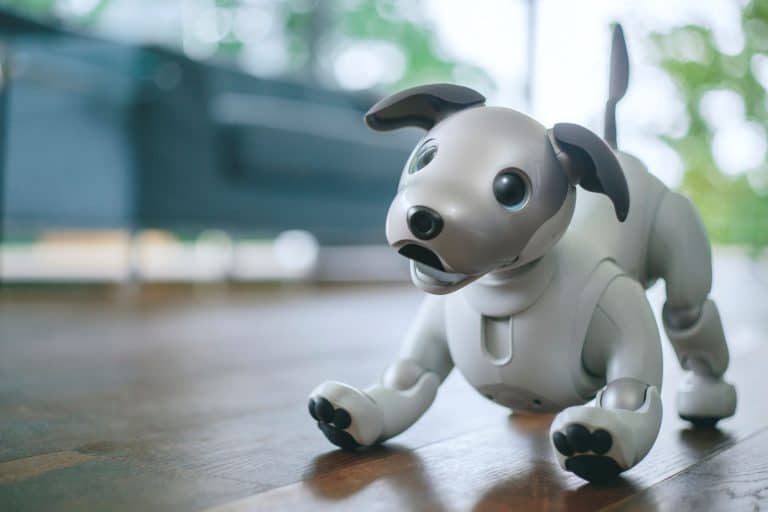
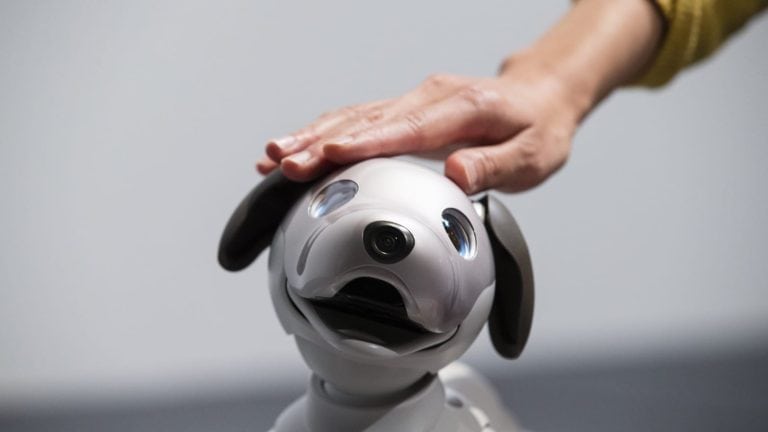
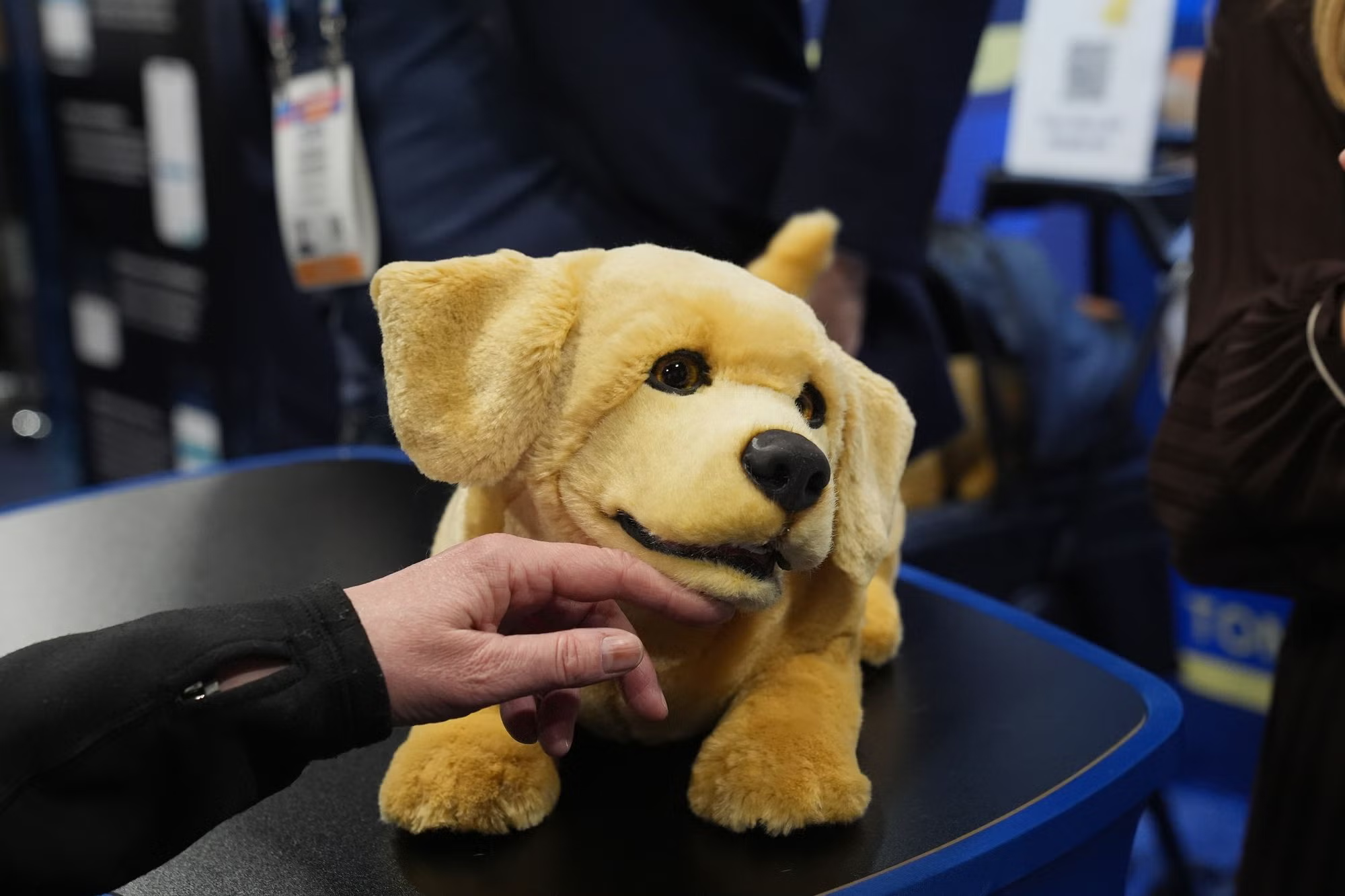
Unlike traditional vibration motors found in smartphones, advanced robot pets use haptics to communicate emotion and behavior. A robotic cat may produce subtle vibrations that resemble purring when stroked. A robotic dog may gently lean into a user’s hand or provide slight resistance when being petted, creating the impression of muscle movement beneath its synthetic fur.
The purpose isn’t simply to vibrate but to convince the brain that a meaningful physical interaction has occurred. As actuator technology improves, manufacturers are creating increasingly nuanced tactile responses that mimic breathing, heartbeat rhythms, body weight shifts, and relaxation.
Why Touch Creates a Stronger Emotional Connection
Human interaction relies heavily on touch. Long before language develops, physical contact communicates comfort, trust, affection, and safety. Robot pets designed for companionship attempt to replicate these emotional cues.
When users stroke a responsive robot pet and receive immediate tactile feedback, the interaction becomes reciprocal rather than one-sided. Instead of pressing a button and watching a programmed animation, users experience a physical response that feels connected to their own actions. This feedback loop encourages longer interactions and can strengthen emotional engagement.
Healthcare providers have explored therapeutic robotic companions for older adults and people living with dementia because touch-based interaction often feels more intuitive than navigating screens or voice-controlled devices. Likewise, children frequently respond more naturally to tactile feedback because physical exploration plays a significant role in learning and emotional development.
How Audio Feedback Shapes Personality
Sound has traditionally been the primary communication method for robot pets. Barks, meows, chirps, purring sounds, breathing noises, and playful vocalizations help establish personality before any physical interaction occurs.
Audio feedback excels at expressing emotional states. A robot dog can whine when ignored, bark excitedly during play, or produce softer sounds while resting. These audio cues immediately communicate mood without requiring visual attention.
However, sound has limitations. Repeated audio clips eventually become predictable, reducing the illusion of spontaneous behavior. Users also recognize when identical recordings repeat under different circumstances, making interactions feel scripted rather than natural.
Haptic feedback avoids some of this repetition because subtle variations in vibration intensity, duration, and timing are harder for users to consciously identify. The most convincing robot pets often synchronize sound with tactile responses, allowing users to both hear and feel the interaction simultaneously.
Visual Interactions Help Communicate Intent
Visual communication has become increasingly sophisticated in modern robotic companions.
Earlier robot pets relied on blinking LEDs or simple eye movements. Today’s systems may incorporate expressive digital eyes, animated facial features, ear positioning, tail movement, body posture, and dynamic lighting effects.
Visual feedback allows robot pets to communicate intent before taking action. For example, widening digital eyes may indicate curiosity, while lowered ears and slower blinking can suggest relaxation. A wagging tail paired with forward posture signals excitement long before the robot begins moving toward its owner.
Unlike haptic feedback, visual interaction works even when users aren’t touching the robot. This makes it particularly valuable for attracting attention across a room or initiating social interaction. Still, visual communication remains observational rather than physical. Users interpret what they see without directly experiencing it through touch.
Movement Brings Robot Pets to Life
Movement is arguably the most recognizable feature of any robot pet. Walking, sitting, stretching, rolling over, jumping, tail wagging, head tilting, and body orientation all contribute to perceived realism.
Smooth movement requires careful coordination between motors, balance systems, inertial sensors, and motion planning algorithms. Small details often determine whether movement appears believable.
Natural animals rarely move at perfectly consistent speeds. They pause, adjust posture, shift weight, and react to environmental changes. High-quality robot pets increasingly incorporate micro-movements that mimic these subtle behaviors.
Movement also works closely with haptic feedback. When a robot gently presses against a user’s hand while simultaneously adjusting posture, the physical sensation becomes significantly more convincing than vibration alone.
Artificial Intelligence Connects Every Sensory System
None of these sensory interactions function independently in advanced robot pets. Artificial intelligence coordinates sensory input and behavioral responses to create cohesive experiences.
AI processes information from cameras, microphones, touch sensors, proximity sensors, inertial measurement units, and environmental sensors before deciding how the robot should respond. Instead of always reacting identically, intelligent robot pets can adapt based on previous interactions.
For example, repeated gentle petting may encourage calmer responses over time, while playful engagement may trigger increasingly energetic behaviors. This adaptability allows haptic feedback, movement, sound, and visual expressions to remain synchronized with changing contexts rather than following rigid scripts.
Comparing Haptic Feedback with Other Sensory Interactions
Each sensory technology contributes something unique to the overall experience.
| Interaction Type | Primary Strength | Primary Limitation | Best Use |
|---|---|---|---|
| Haptic feedback | Creates realistic physical interaction | Requires direct contact | Emotional bonding, therapeutic applications |
| Audio feedback | Expresses emotion quickly | Can become repetitive | Communication and personality |
| Visual feedback | Shows expressions and intent | Less immersive without interaction | Social engagement and observation |
| Movement | Creates lifelike behavior | Mechanically complex | Realism and play |
| AI-driven behavior | Personalizes interactions | Depends on high-quality data and programming | Long-term engagement |
The most immersive robot pets rarely rely on a single sensory channel. Instead, they combine multiple forms of feedback into unified experiences.
Why Multi-Sensory Experiences Feel More Realistic

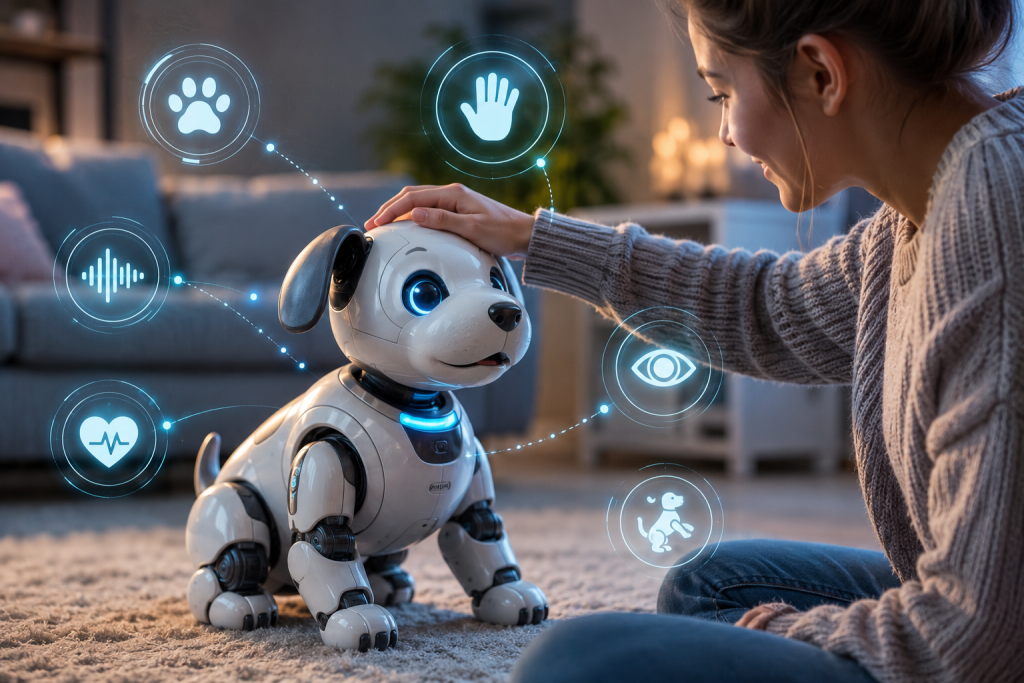
The human brain naturally combines information from multiple senses. When users pet a robot dog, they expect to feel movement, hear breathing, observe body language, and see facial expressions simultaneously. If only one sense responds, the illusion weakens.
For example, a robot that barks without moving appears artificial. Likewise, a robot that vibrates without changing posture may feel disconnected from its environment.
Combining synchronized sensory feedback increases realism because each channel reinforces the others. Researchers studying human-robot interaction often describe this as sensory congruence. When visual, auditory, tactile, and movement cues all communicate the same emotional state, users perceive the robot as more believable.
Which Sensory Interaction Matters Most?
The answer depends on the robot’s intended purpose. Educational robot pets often prioritize expressive visuals and speech because they need to teach concepts and communicate clearly. Entertainment robots emphasize movement and playful sound effects to maintain engagement.
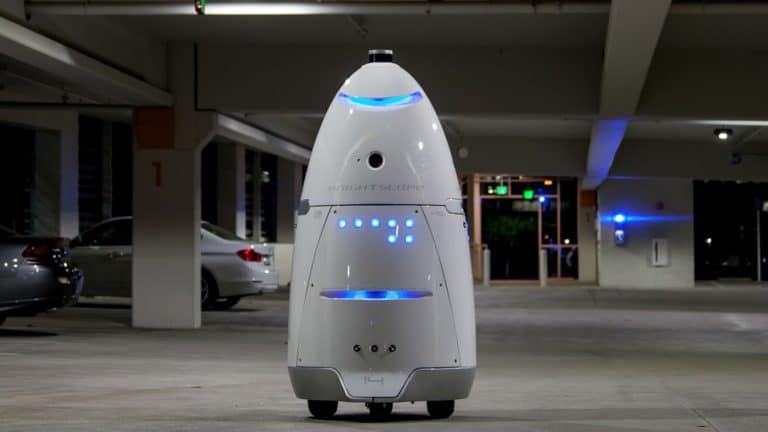
Companion robots designed for emotional support place greater emphasis on haptic feedback because physical interaction encourages comfort and attachment. Security or monitoring robots may rely primarily on visual indicators and voice communication rather than tactile experiences.
Rather than asking which technology is objectively superior, designers increasingly focus on identifying the right sensory combination for each application.
Emerging Technologies Are Expanding Haptic Capabilities
Recent advances in soft robotics, flexible actuators, electronic skin, and pressure-sensitive materials are changing what haptic systems can achieve. Instead of relying solely on vibration motors, newer prototypes simulate muscle tension, breathing patterns, heartbeat rhythms, and body warmth.
Artificial skin embedded with distributed touch sensors allows robot pets to distinguish between gentle stroking, scratching, hugging, and accidental contact. Future systems may even adapt tactile responses to individual users by learning preferred interaction styles through machine learning.
These developments suggest that haptic feedback will continue evolving from simple vibration into highly personalized physical communication.
The Future Lies in Sensory Integration Rather Than Competition
The comparison between haptic feedback and other sensory interactions in robot pets reveals that no single technology can create a convincing companion on its own. Touch delivers intimacy, sound provides personality, visual cues communicate emotion, movement establishes realism, and artificial intelligence ties every interaction together into a cohesive behavioral system.
As robotics hardware and AI continue to advance, future robot pets will likely blur the distinction between these sensory channels even further. Instead of treating haptic feedback, audio, movement, and visual expression as separate features, designers are building integrated experiences where every response supports the others.
The result is a robotic companion that feels less like a machine performing programmed actions and more like a responsive presence capable of forming meaningful, engaging interactions over time.