

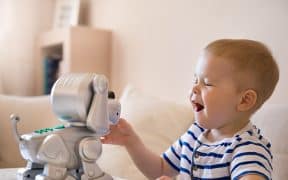
Attachment dynamics between children and robot pets involve the emotional bonds formed through interactive, lifelike, and personalized robotic companions. These relationships impact children's emotional support, social skills, and cognitive development, while also raising important ethical and developmental considerations.

The science behind bonding with robotic companions delves into the psychological, neurological, and technological factors that enable humans to form emotional connections with artificial beings. By exploring attachment theory, reward pathways, and design elements, this field reveals how and why we develop meaningful relationships with robot pets.

While many companies are still perfecting the art and science of creating AI robots, Musk proclaims that Tesla's Humanoid Robot Optimus may already be ready to go public end of next year.

Neural networks and deep learning are revolutionizing robot pet design by enabling these companions to perceive their environment, understand human speech, and express emotions authentically. Through advanced AI technologies, such as sensory perception and adaptive learning, robot pets are evolving to engage in meaningful interactions, fostering deeper connections with their human counterparts.

Our Social Media
Follow Us Follow Us Follow Us