

Functional Upgrades to Transform Your Robot Pet’s Abilities

Share
Table of Contents
A robot pet can be charming right out of the box. It can roll, walk, react, make sounds, maybe follow you around a room, and give you that satisfying feeling that the future has finally moved into your living room. But the real magic usually starts after that first impression wears off.
What separates a robot pet that feels like a fun gadget from one that feels genuinely smart is not just the base hardware. It is the quality of its upgrades. That matters because today’s robot pets are no longer limited to preprogrammed tricks. Current models in the category increasingly use features like face recognition, gesture recognition, obstacle detection, path planning, app-based controls, AI tracking, and over-the-air software updates to become more responsive and more useful over time.
Loona, for example, highlights multimodal interaction features including face and gesture recognition. Enabot focuses on mobile monitoring, AI tracking, app control, and auto-recharging. Petoi pushes modularity and programmable extensibility. Unitree shows how advanced sensing and OTA updates can expand a robot’s capabilities even further.
So if you are thinking about functional upgrades, the real question is not “What extra features can I add?” It is “Which upgrades will actually make my robot pet more capable, more engaging, and more useful in everyday life?” That is where this guide comes in.
Why Upgrades Matter More Than You Think
A lot of people assume robot pet upgrades are mostly cosmetic or optional. In reality, the best upgrades change how the robot senses the world, how it moves through that world, and how well it can respond to you inside it. In simple terms, a better robot pet is usually one that can perceive more, decide faster, and behave more naturally.
That is why the most important upgrades tend to cluster around sensing, navigation, interaction, and software intelligence. A new shell or decorative accessory might make your robot pet look cooler, but an improved camera, better obstacle detection, stronger path planning, or richer behavior engine can make it feel dramatically more alive.
The result is a shift from toy-like behavior to something more adaptive. And that is usually the upgrade most owners are actually chasing, whether they realize it or not.
Start With Smarter Sensing
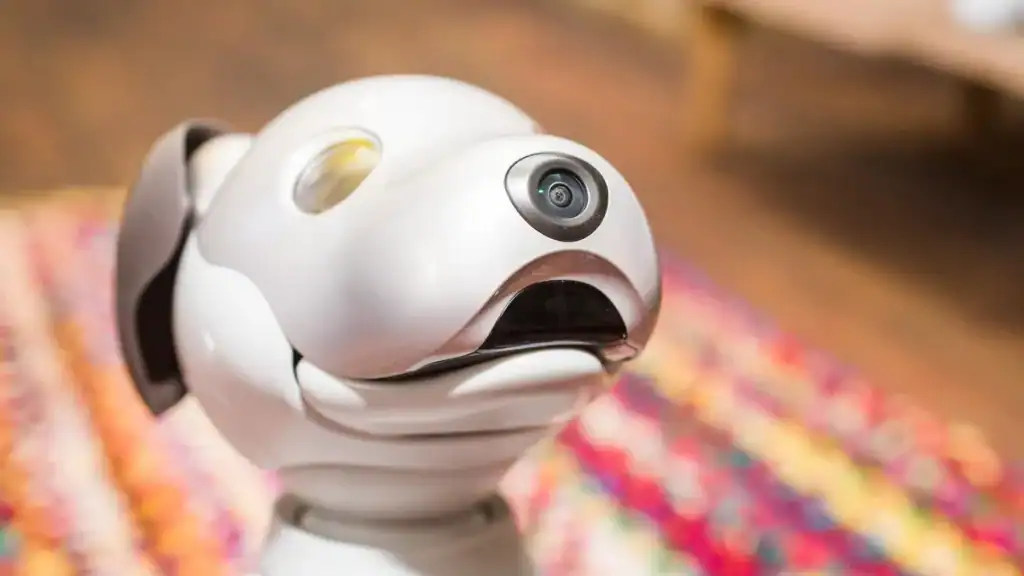
If you want the biggest functional leap, start with how your robot pet senses its environment. A robot pet that cannot reliably see, hear, or map what is around it will always feel limited. It may still be entertaining, but it will not feel very capable. Smarter sensing is what turns generic movement into a meaningful response.
Vision and Camera Upgrades
Camera-based upgrades are among the most useful because they unlock several abilities at once. They can improve visual awareness, enable remote viewing, support recognition tasks, and create richer interactions.
Loona’s positioning around face recognition, body detection, and gesture recognition shows how vision systems transform interaction from simple button-based control into something closer to social behavior. Instead of merely executing a command, the robot can identify who is in front of it and respond with more context.
On the utility side, Enabot’s robot line shows how mobile cameras add practical value beyond personality. Features such as real-time monitoring, AI tracking, and two-way communication make a robot pet more than a companion. They turn it into a mobile home presence device that can move through space while keeping eyes on what matters.
That means a camera upgrade is not just about recording video. It can improve presence, tracking, recognition, and responsiveness all at once.
Obstacle Detection and Navigation Sensors
A robot pet that bumps into chair legs and gets trapped under furniture stops feeling smart very quickly. This is why obstacle detection is one of the most underrated upgrades.
Loona explicitly highlights obstacle detection and path planning. Unitree goes even further with 4D LiDAR and upgraded navigation systems. Those are higher-end implementations, but they illustrate the same principle: better spatial awareness leads to better behavior.
For many users, this is where a robot pet starts to feel less scripted. Instead of following a rigid route, it can adapt to a room, avoid new obstacles, and behave in a way that seems more intentional.
If your current robot pet often stalls, collides, or takes awkward paths, navigation and obstacle-sensing upgrades will usually do more for the experience than almost any cosmetic add-on.
Sound and Voice Recognition Upgrades
Interaction quality matters just as much as movement quality. Voice-enabled controls and sound localization can make a robot pet easier to use and far more engaging. Loona’s materials emphasize sound localization and voice-driven interaction, which is a clue to how much users value hands-free engagement.
This kind of upgrade matters because it reduces friction. You stop treating the robot like a device that must always be manually triggered, and start treating it like a companion or assistant that can react to you more naturally.
That said, not every voice feature is equally valuable. A simple “play sound” or “execute trick” mode is fine, but the real step up comes when voice interaction links to recognition, context, or custom routines.
Improve How Your Robot Pet Moves and Reacts
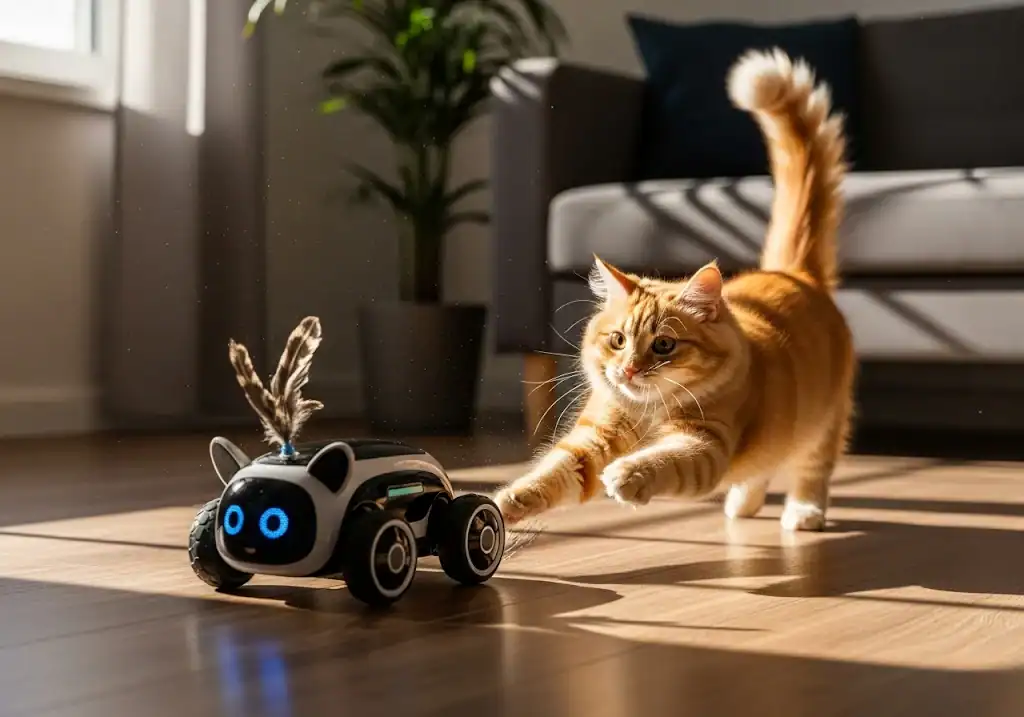
Once sensing improves, movement becomes the next bottleneck. A robot pet can have great sensors, but if it still reacts slowly or moves stiffly, the illusion breaks. Functional upgrades in this category are about making the robot pet’s behavior feel less mechanical and more responsive.
Better Path Planning
Path planning is one of those features that sounds technical until you experience it. Without it, a robot pet often acts like it is solving the room one collision at a time. With stronger path planning, it starts looking like it understands where it is going. Loona and Unitree both emphasize path planning or advanced navigation as core parts of their value proposition.
For users, this upgrade translates into smoother following behavior, fewer awkward stops, better room traversal, and a more polished overall experience.
Behavior Responsiveness
A good robot pet should not only move. It should react well. This is where better processors, improved behavior engines, and software optimization start to matter. Loona’s feature stack is built around recognition and interaction, which depends on the robot reacting quickly and appropriately to inputs. OTA software models from Unitree also show how responsiveness can continue improving after purchase.
In practical terms, that means your upgrade path should not focus only on adding sensors. You also want the robot to process those inputs in a way that produces believable behavior.
Mobility and Terrain Awareness
Not every home is robot-friendly. Rugs, thresholds, chair legs, pet bowls, and narrow spaces all create friction.
Higher-end platforms like Unitree demonstrate how better sensing and motion systems can handle more complex movement environments. Most home robot pets will not need advanced quadruped performance, but the principle still applies: if your robot pet struggles to move confidently through your space, then mobility-focused upgrades are worth more than yet another novelty feature.
Add Features That Make Your Robot Pet More Useful at Home
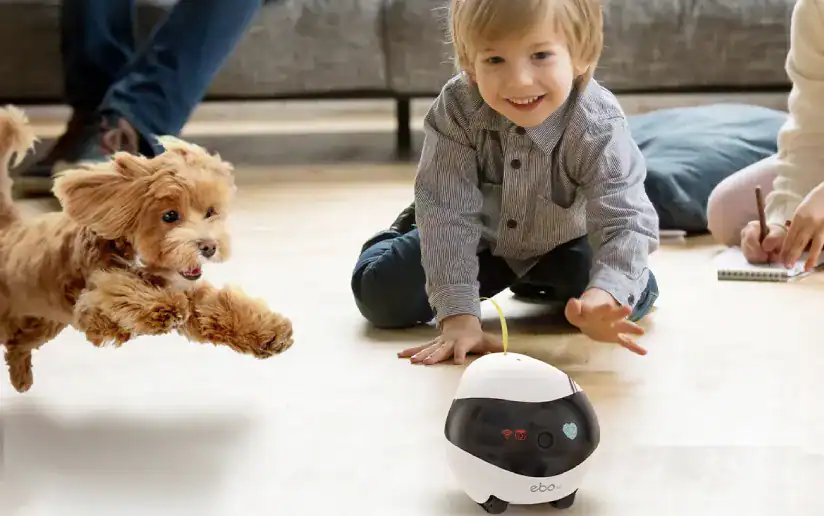
Some upgrades do not just make a robot pet smarter. They make it matter more in everyday life.
App Control and Remote Operation
App-based control is one of the clearest functional upgrades because it expands when and how you can use the robot. Enabot’s platform strongly demonstrates this value with remote monitoring, app control, and mobile interaction. Unitree also ties its experience to app-based interaction and visual control.
For casual users, this creates convenience. For families, it creates connection. For pet owners who want to monitor a room remotely, it adds a clear use case. A robot pet with strong app control stops being a local toy and starts becoming a connected device you can engage with on your terms.
Two-Way Audio and Monitoring
This is one of the most practical upgrades if your robot pet doubles as a home companion or pet monitor. Enabot highlights two-way communication and real-time monitoring across its lineup. That changes the role of the robot from something that merely reacts to something that helps you stay present in the home, even when you are not there.
For many households, this is the upgrade that creates the strongest practical justification for owning a robot pet at all.
Auto-Charging and Battery Improvements
Nothing makes a smart device feel dumber than constantly needing rescue. Battery and charging upgrades matter because they reduce maintenance burden. Enabot’s automatic return-to-dock feature is a good example of how this improves continuity. Instead of becoming inert when power runs low, the robot can recover on its own and stay available.
That may not sound glamorous, but it dramatically improves day-to-day usability. A robot pet that can manage its own charging cycle feels far more independent.
Unlock More Personality With Software and AI

Hardware upgrades are exciting because they are visible. Software upgrades are often more powerful because they compound.
OTA Updates
Over-the-air updates are one of the best signs that a robot pet can keep getting better after you buy it. Unitree explicitly promotes OTA upgrades as a continuing way to enrich features and improve the user experience. That matters because it changes your buying logic. You are no longer evaluating only what the robot can do today. You are also evaluating whether the platform can evolve.
Personalized Interaction
Recognition-based personalization is one of the biggest reasons some robot pets feel more memorable than others. Loona’s face recognition and user-aware interaction model are good examples of this. The difference is subtle but important. A robot that merely performs actions is interesting. A robot that reacts differently to different people starts to feel relational.
Programmable Routines and Custom Behaviors
For tinkerers and learners, the most meaningful upgrade path is often programmability. Petoi’s Bittle is especially relevant here because it is positioned as open-source, customizable, and suited to block-based coding, C++, and Python. Petoi also supports extensible modules such as vision hardware, which opens the door to custom behavior design.
This matters because custom behavior is often more transformative than prebuilt tricks. Once you can define how the robot responds, when it moves, what it tracks, or what triggers a routine, the robot pet becomes a platform rather than a product.
The Best Upgrade Paths for Different Types of Owners
Not everyone should build the same robot pet. If you are a casual user, the best upgrades are usually app control, obstacle detection, and battery or docking improvements. These make the robot easier to live with and more reliable.
If you want a companion-style experience for family use, prioritize better vision, sound localization, voice interaction, and personalized behaviors. Those upgrades improve the sense that the robot is socially present rather than just mechanically active. Loona’s feature direction is a strong example of this kind of upgrade path.
If you are a STEM learner or hobbyist, modularity and programmability matter more. Petoi’s approach is especially relevant because it encourages coding, hardware exploration, and extensibility. If you are an advanced robotics enthusiast, then navigation stacks, LiDAR, richer sensing, and OTA-supported AI growth become the more compelling direction.
Which Upgrades are Actually Worth the Money?
The best upgrade is usually the one that removes the biggest frustration.
- If your robot pet struggles to understand space, invest in sensing and navigation first.
- If it feels boring or repetitive, invest in software, AI behavior layers, or programmable routines.
- If it is fun but not very useful, add a camera, an app, and two-way communication features.
- If it dies too often, improve charging and battery continuity.
In other words, do not buy upgrades by category name alone. Buy them by the problem they solve. That is the smartest way to keep a robot pet from becoming an expensive novelty.
Common Upgrade Mistakes to Avoid
The most common mistake is chasing impressive-sounding features without a clear use case. LiDAR sounds exciting, but many users would get more practical value from better obstacle avoidance and app control. A camera module sounds advanced, but it is much more valuable when paired with tracking, recognition, or remote viewing. Voice control sounds modern, but weak behavioral logic can still make the robot feel shallow.
The second mistake is ignoring software. Current products in the space make it clear that software is not secondary. OTA updates, app ecosystems, and behavior engines are central to how capable a robot pet feels over time.
The third mistake is upgrading without thinking about the owner’s profile. A family robot, a coding robot, and a high-end robotics platform should not be evaluated the same way.
Final Thoughts
A better robot pet is not simply one with more features. It is one with better priorities. The upgrades that truly transform ability are the ones that improve perception, autonomy, responsiveness, and usefulness. Smarter sensing helps the robot understand the world. Better movement and path planning help it act within that world. Stronger software and AI make those actions feel less scripted. And utility-focused additions like app control, remote monitoring, auto-docking, and custom routines make the robot pet easier to justify long after the novelty fades.
That is the real upgrade path worth following.
Frequently Asked Questions
What is the best first upgrade for a robot pet?
For most people, the best first upgrade is better sensing, especially obstacle detection or a stronger camera system. These upgrades improve awareness, navigation, and interaction all at once. Current robot pet leaders consistently treat sensing as foundational rather than optional.
Are camera upgrades worth it for a robot pet?
Yes, if the camera does more than record. The real value comes when it supports recognition, tracking, remote viewing, or interaction. Enabot’s monitoring features and Loona’s recognition-oriented feature set both show why camera-based upgrades can have an outsized impact.
Can software updates really make a robot pet smarter?
Yes. Unitree explicitly positions OTA updates as a way to continue enriching features and improving the experience over time. In connected robot platforms, software can meaningfully change behavior quality, responsiveness, and available functionality.
What makes a robot pet feel more lifelike?
The biggest factors are responsive sensing, natural movement, personalized interaction, and behavior that changes based on context. Features such as face recognition, gesture recognition, sound localization, and adaptive response systems contribute to that more lifelike feeling.
Which upgrades are best for kids or families?
For family use, the strongest upgrades are usually vision-based interaction, voice controls, app access, and safe navigation. Those features improve both engagement and ease of use.
Are modular robot pets better for upgrading?
Usually, yes. A modular or open-source robot pet gives you more room to customize behavior and hardware over time. Petoi’s Bittle is a strong example because it supports coding, extensibility, and additional modules such as vision components.


Our Social Media
Follow Us Follow Us Follow Us